Category: Business

Runny fruit pudding in a glass bowl with cream and a small “Schlumpf Pudding” sign, illustrating how branding and presentation can change perception of a product

Schlumpf Pudding… and what a failed dessert taught me about branding

Brands and people – people probably more naturally so than brands – have a reputation. And unless you’re some super-gifted talent (or a sociopath), you probably care, varying amounts, about what other people think of you. Chances are you also care about keeping that reputation in good stead – or building on it and improving yourself.

When I work with clients on branding projects and we talk about perception and brand values, a story comes to mind that has little to do with business and everything to do with dessert.

Years ago I took a pudding to a garden party at my new boyfriend’s (now husband’s) mates. It was a ‘proven recipe’. Well, until that day – when it came out tasting great but looking utterly rubbish. Like really, really rubbish. It completely refused to set and looked like fruit soup… with runny cream on top.

Shops were shut. No time to start again. So we did the only sensible thing – we gave it a dramatic German name and served it like that had been the plan all along. Born was the Schlumpf Pudding. Smurf pudding, essentially – German-sounding enough to be plausible, weird enough that nobody could call us out on it.

Not a single raised eyebrow. Bowl completely empty by the end of the afternoon. Reputation as ‘quite ok in the cooking department’ intact.

I’ve thought about that pudding a lot over the years, because I see the same thing play out in branding all the time.

Nothing about the product changed. Same ingredients. Same result. What changed was the framing – the name, the confidence, the complete absence of apology. And that alone shifted how people experienced it.

But – and this is the bit that actually matters – it only worked because it tasted amazing. Confidence on its own isn’t enough. The name might have nudged people to try it despite appearances (remember the Fiat Multipla?!) – but the taste was what made them finish it.

So where does branding come into this?

Well, quite a lot actually. Because what happened that afternoon in someone’s garden wasn’t magic – it was positioning. And I see businesses get this wrong, and get it right, every single week.

The quality is almost never the problem. What lets established businesses down is the gap between how good they actually are and how confidently their brand communicates it. That gap is doing quiet, invisible damage – to first impressions, to client decisions, to opportunities that never even make it to a conversation.

Here are three things worth thinking about.

1. Is your brand apologising for itself?

This is subtler than it sounds. Nobody sits down and writes “we’re not sure we’re good enough” on their website. But it leaks through in other ways.

Vague language that hedges instead of commits. A visual identity that looks a bit tired but “does the job”. An About page that lists what you do but never quite says why you’re the right choice. A pitch that over-explains because you’re not sure the work speaks for itself.

The tell-tale sign? You find yourself verbally filling in the gaps – explaining your brand rather than letting it do the talking. If you’re constantly clarifying, contextualising, or qualifying what you do, your brand isn’t carrying its weight.

Ask yourself: if someone landed on your website cold, with no prior knowledge of you, would they immediately feel the quality of what you do – or would they have to look quite hard to find it?

2. Confidence isn’t arrogance – and the difference matters

There’s a version of this advice that makes people uncomfortable. “Just be more confident” can sound like “just pretend to be something you’re not” – and that feels dishonest.

But there’s a real distinction between arrogance and confidence, and it’s worth being clear about it.

Arrogance is overstating what you are. Confidence is simply not understating it.

The Schlumpf Pudding wasn’t presented as a Michelin-starred creation. It was just presented without apology, as a thing that existed and had a name and was entirely intentional. That’s all. We didn’t claim it was the best pudding anyone had ever tasted. We just didn’t tell everyone it had gone wrong.

Your brand doesn’t need to shout. It doesn’t need to claim things it can’t back up. It just needs to stop quietly signalling doubt. There’s a version of your business that speaks plainly, stands behind its work, and trusts the quality to do the rest. That’s not arrogance. That’s just good branding.

The test: read your website copy out loud. Does it sound like someone who believes in what they do – or someone hoping you won’t notice the wobble?

3. You often don’t need a new recipe – just better presentation

This is the one that surprises people most. They come to me expecting a complete overhaul and leave realising that the bones were good all along.

A full rebrand isn’t always the answer. Sometimes the answer is cleaner messaging that says what you actually do, without the waffle. Sometimes it’s a visual identity that’s been refreshed rather than replaced – brought up to date so it reflects the business you are now, not the one you were ten years ago. Sometimes it’s simply the confidence to lead with your best work rather than burying it three clicks deep.

None of that requires starting from scratch. It requires being honest about what’s working, what isn’t, and what you’ve been too close to it to see clearly.

That’s usually where I come in – not to reinvent the recipe, but to help you serve it properly.

The gap between what you are and how you’re coming across

Most businesses I work with aren’t struggling because they’re not good enough. They’re struggling because their brand hasn’t kept pace with them. It was built at a different stage, for a different version of the business, and it’s been quietly undermining them ever since.

The good news is that the gap between what you are and how you’re coming across is almost always smaller than it feels. You’re not starting from scratch. You’re just overdue a proper look at what’s getting in the way.

So – hand on heart – does your brand do you justice? Not just visually, but in the way it speaks, the impression it leaves, the clients it attracts?

If there’s a flicker of “not quite” in your answer, that’s worth paying attention to.

Fancy a chat?

If any of this resonates, I’d love to have a chat with you about what’s working for your brand, what isn’t, and what might be getting in the way.

Book a discovery call here.

The rule of five beyond your five a day

So I’ve got three boys aged 13 and younger. If all these years as a parent have taught me something for business, it’s that little and often works better than procrastinating and facing a huge heap. How did my family life make me come to that conclusion? 

Take bedrooms. Even thinking about them left to their own devices fills me with fear and utter despair. I know I wasn’t great as a child (my parents later concluded that I just had my very own way of organising that didn’t quite match the adult world) but those three are a level above. 

The words wading through stuff gets new meaning. So how can you motivate your seven year old bedroom dumpster dive loving thespian to clean up his act? 

Or laundry. You’ve gone through hours of repeat soak, wash, rinse cycles to get it all done, then fold / iron basket loads and – this is where it remains. The fruit of your labour stacked up but never touched to be put away into above mentioned kids’ wardrobes. Yet we somehow need to teach them independence and self-sufficiency (or house chore slavery only goes that far). So what do you do?

In comes Steve’s rule of five. It’s one of many little rule nuggets I’ve adopted from him over time. Every day, the kids have to pick up just five things from their bedroom floor before they can do whatever they asked if they can do it. Every laundry, they get a small pile of about five items to put in their drawers. Instead of battering them into prolonged activities, they can spend just five minutes doing whatever practice – can be more, but five is ok. And they have to go outside just for five minutes no matter what the weather (which is then never just five once they are out and about)… 

The rule of five works great for business. It takes the scariness out of the scariest task list. Prioritise and focus on the top five and you have a good chance to get them done. Do little bits of admin every day so end of month isn’t a daunting bank reconciliation exercise.

It doesn’t have to be exactly five. The point being that little but regularly is far more manageable than avoidance with the inevitable mountain to climb in the end. And whilst it may seem never ending, I much prefer this way to the alternative of sporadic exhausting long slogs. 

Plus little but often keeps you practiced and five a day is a thing we can all do (even the government says…) 

Sutton Coldfield design studio

What running a Sutton Coldfield design studio & brand consultancy taught me

It started with some short cuts…

Everybody has different paths to their chosen career. And everyone will have different experiences with self-development professionally and personally. Education has always been important to me as a designer. From the moment I entered the creative scene in London, to now where I am the creative director of a Sutton Coldfield design studio, keeping myself skilled-up is a key element of my working week.

Graphic design and brand consultancy may be based on talent, but it’s hard to be a good designer without additional skills in software, technology, understanding businesses…

Sutton Coldfield design studio and brand consultancy

When I was an artworker at a London design agency, every lunchtime I stayed in and basically hacked on a scrap document to learn what could make my typesetting faster. Soon, I was the person that would know a shortcut key if there was one. It helped being recognised as a valuable team member and it felt like the right thing to do. Back then we used Quark, and Adobe was that new thing that made pdfs that would embed fonts, oh wonder! I guess I was lucky to start my career at a time when software started to change the creative industry in a storm.

Two years on, I was studying at Central Saint Martins whilst working freelance. I’d spend most of any spare time in libraries going through books about advertising, graphic design, interior design, typography, colour theories, human behaviour, communications – and how to run a business. 

Learning from running our Sutton Coldfield design studio and brand consultancy

As soon as I transitioned to working full time as a designer, it fascinated me how we’d end up with those briefs to design a brand identity. What If there was another way to shape that brand? So off I went again to Brunel University to do a course on brand strategy.

And on it goes – workshops, networking mastermind sessions, online tutorials… all the way to starting our Sutton Coldfield design studio back in 2005. To be fair, Essence is probably not a regular graphic design studio: Steven, the other half, is super tech-focused, our data meister and the man that taught me all about CSS, JS, JSON, HTML, how to troubleshoot, and how to comment on code. And I come from a highly conceptual, ideas-focused advertising background with a passion for typography, print technology, copywriting, and using photography to tell a brand story in different media. We like to call Essence a brand consultancy for those reasons.

Even now, more than 16 years in business here, my motto remains: ‘Every day is a school day’. My biggest ongoing learning challenges are UI / UX, tech, automation, and SEO-related because that’s what my clients need help with beyond solid graphic design and branding. There’s so much out there nowadays, even here on social channels, the learning world is your oyster. 

To keep improving your skills has nothing to do with your field of expertise – whether you are a business coach, interior designer, marketing manager of a hotel or restaurant, a shop owner selling products to the trade or consumer – or you are a brand consultant and graphic designer, like myself – it is vital to keep learning.

What running a brand consultancy and Sutton Coldfield design studio taught me is not just about business methodologies, project- and client management, cashflow planning, having pricing structures, sales and marketing plans, a vision for the brand, and a comprehensive service setup… It taught me that everything is in flux and you have to move with it. Industries change. Trends change. You change and your experience can greatly enhance what you sell and how you sell it. Keep looking around and up from your work to see what else is out there. It will be time well-spent.

Your web tech wrapped up

Your web tech wrapped up

It’s geeky time again! Let’s talk web tech… If you have a website, you probably know there’s a lot more to the site itself. My clients won’t notice most of these extra things to think about when setting up a site. 

And I’ve got a lot of little helpers that make the web process smooth sailing. Here’s a quick roundup of some of my faves. 

Some are available as plugins especially for WordPress, which has so many little nifty tools. These here are all available as web services though so use whatever system you’re into.

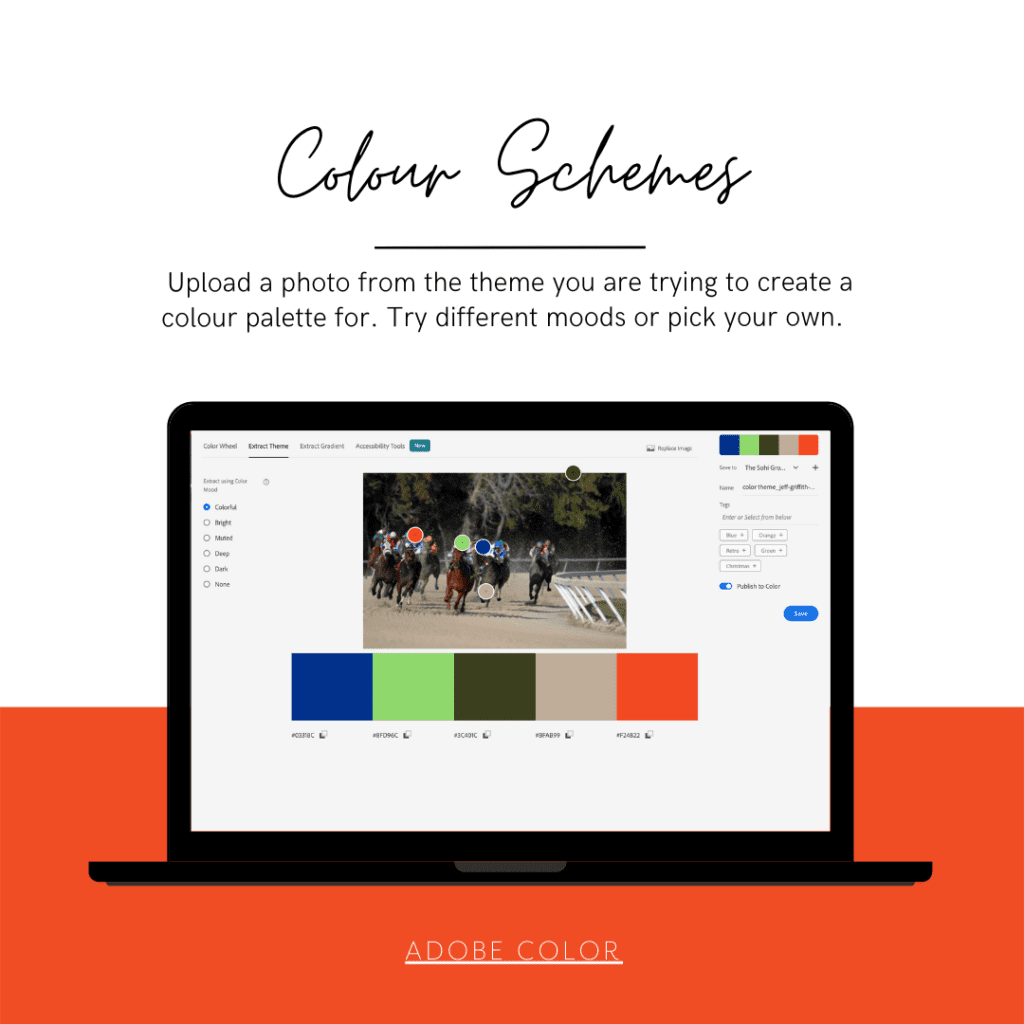
Adobe Color

Looking for the perfect colour palette for your website? Many designers spend countless hours trying to come up with the right palettes. Fortunately, there’s an excellent tool that can help you — and it’s free. Adobe recently launched a new site called adobe color (http://color.adobe.com) which takes advantage of Adobe Kuler’s (another free tool) colour wheel to provide you with a series of beautiful colour combinations.

You have the choice to use the colour wheel to define complimenting colours with different pre-sets:

  • Analogous
  • Monochromatic
  • Triad
  • Complementary
  • Split complementary
  • Double split complementary
  • Square
  • Compount
  • Shades
  • Custom

The one I love the most is Extract Theme where you upload a photo or graphic to pick the colours from – again with handy presets. You can opt for the colourful, bright, muted, deep, dark or your own.

Once you have a colour, it’s also really handy to see it in action as a gradient. Again, something you can do with Adobe Color. And if you are catering for higher accessibility, voila! Check out the colour blind simulator.

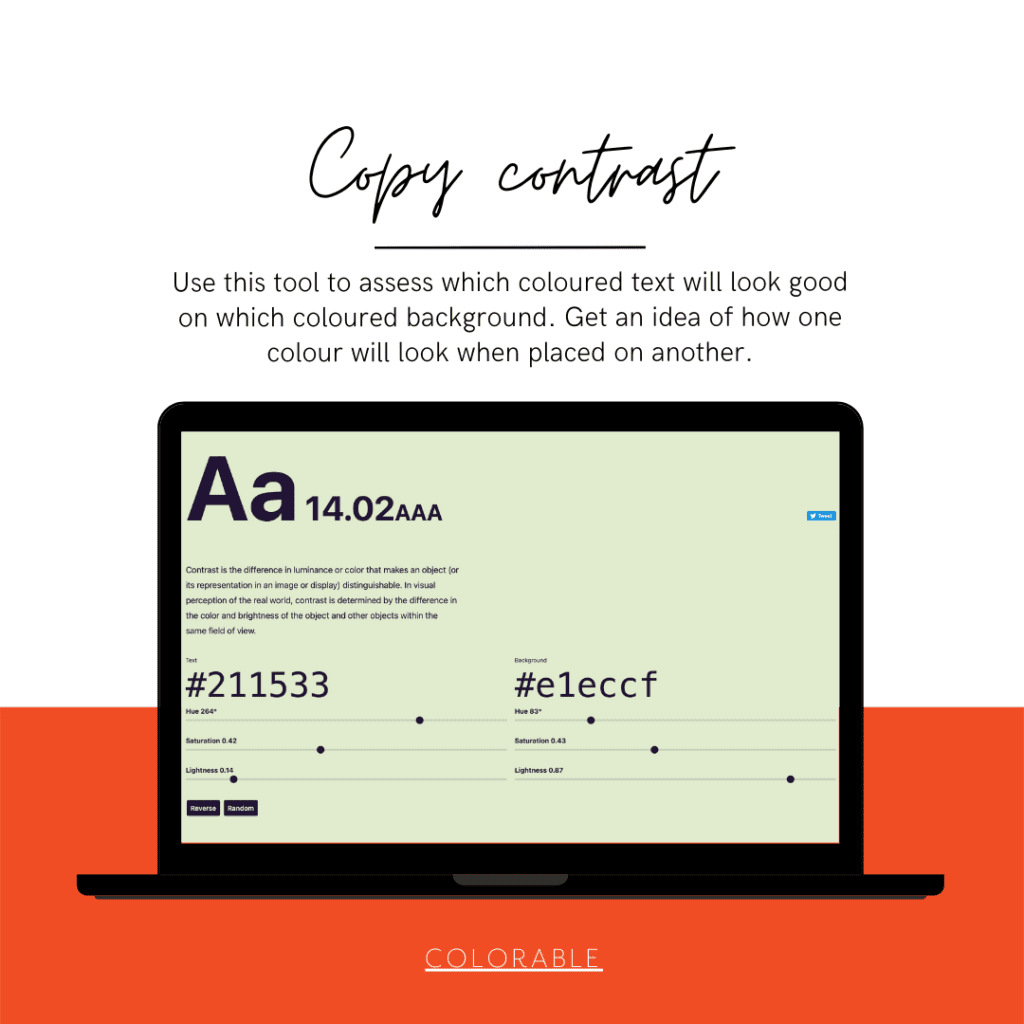
Colorable

The human eye can distinguish about 10 million different colors. But we’re not able to spot every nuance out there. That’s where contrast comes in. Contrast is the difference in luminance or color that makes an object distinguishable from another. Contrast is important because it determines whether an object stands out from the background, or if it blends in.

Colorable helps you test different colours ‘on top of each other’, looking how a font colour will appear on different background colours.

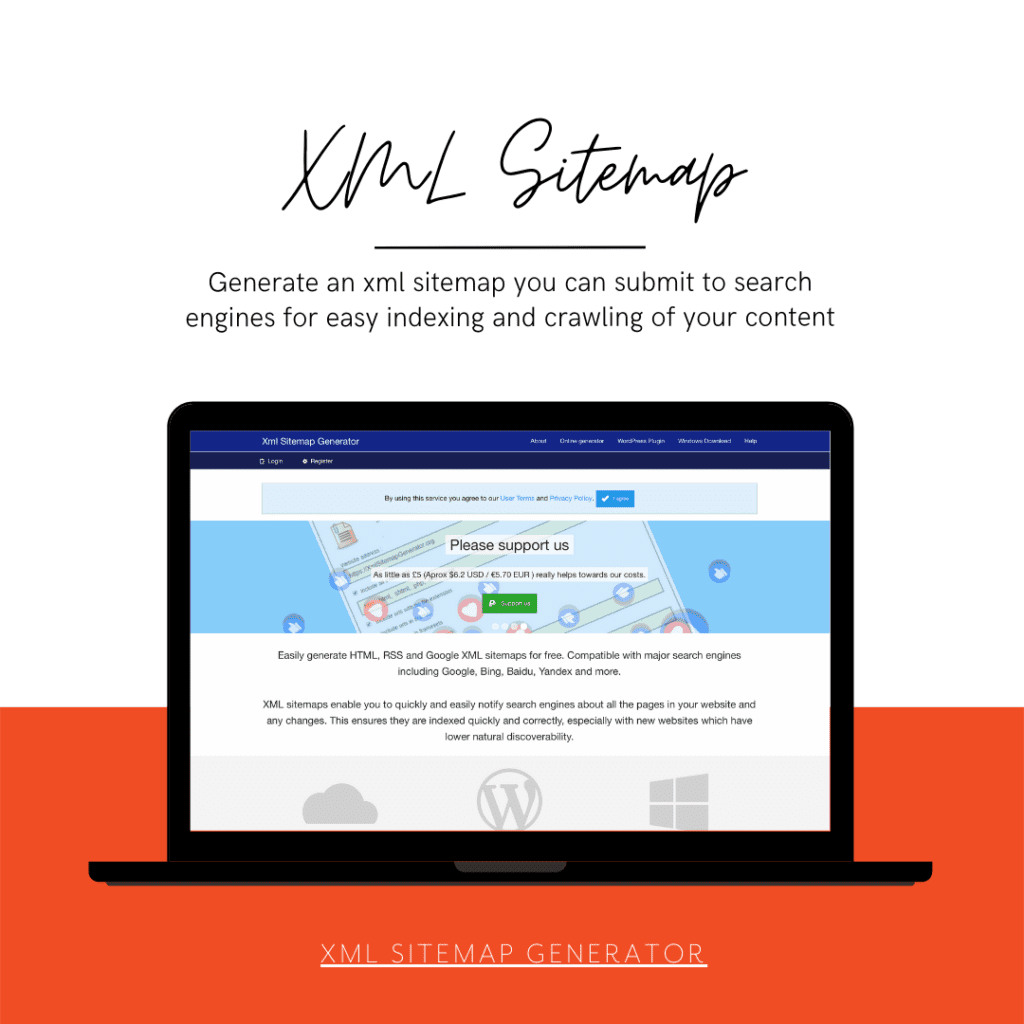
XML Site map generator

XML sitemaps are a good idea no matter what, but they’re particularly important for sites with large numbers of pages. If you’re running a large site, you might have hundreds of thousands of pages, and manually submitting each one by hand to search engines would be a time-consuming and potentially error-prone task. XML sitemaps can simplify the process.

Plugins such as Yoast for WordPress or OSMap for Joomla run websites can be used ‘on site’ as well, but if you don’t want plugins, this site map generator is quick and effective.

A whole other section worth mentioning – Google Search. Here you can use your XML Sitemap. When you submit your site in the console, it will also alert you to any issues with pages, links, breadcrumbs etc. It’s a rabbits hole but in its basic functions it’s very useful for helping with SEO.

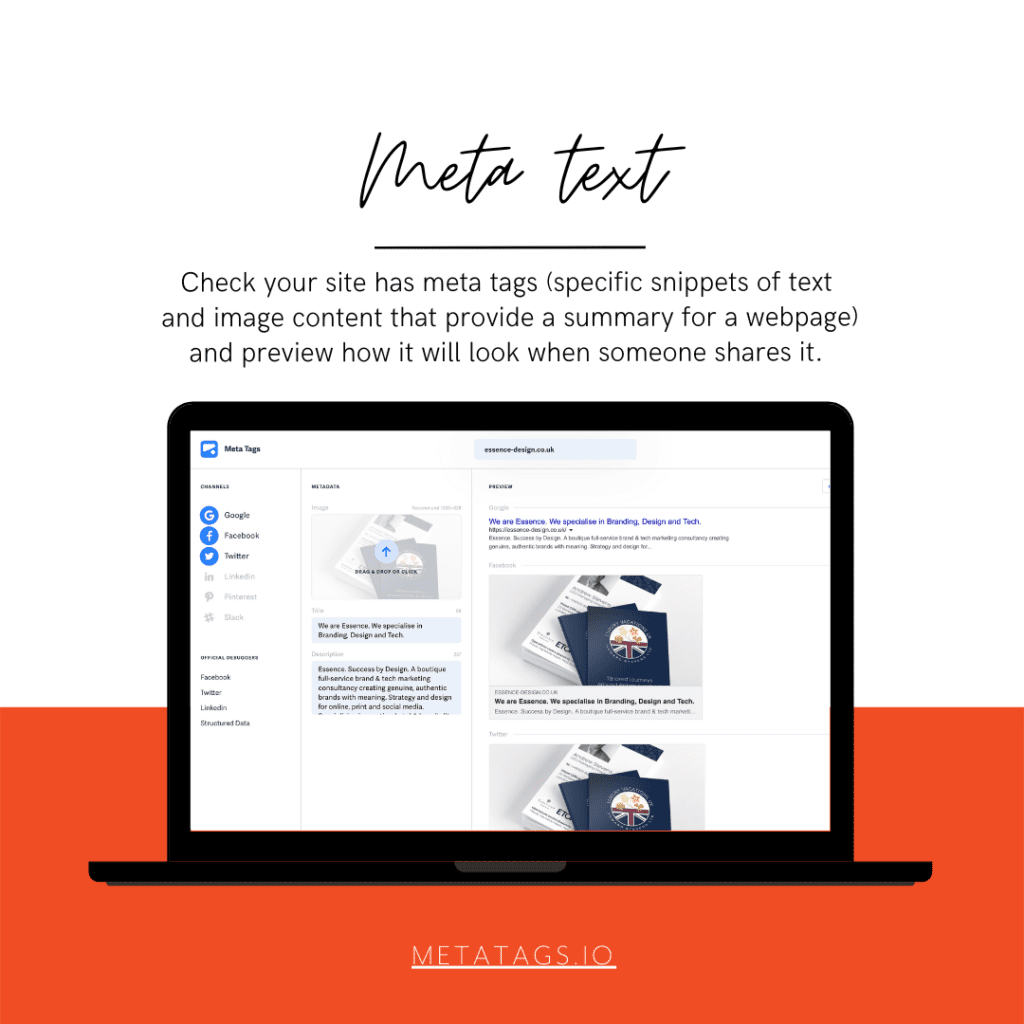
Meta Tags

Meta tags are invisible text that helps search engines understand what your webpage is about. For example, meta description tags are the short, 150-character snippets that appear next to a search result. These help users decide whether or not to click through to your page. This website shows you how you can edit and experiment with your content and previews how your webpage will look on various social media channels.

Again, plugins such as Yoast for WordPress solve this issue neatly, but some parts are limited to the premium version. Meta tags is free to use.

Let’s Encrypt

Let’s Encrypt is a Certificate Authority that provides free TLS certificates to millions of individuals and organizations operating in nearly every country around the world. They’re a nonprofit with a mission to encrypt the entire Internet. They help their users set up HTTPS websites so that everyone can benefit from encryption, from users browsing the web to admins managing servers.

Most good web hosts will integrate let’s encrypt so you shouldn’t have to worry about a thing. Just check that your hosting package comes with a free SSL certificate and that you have the padlock on your url starting with https.

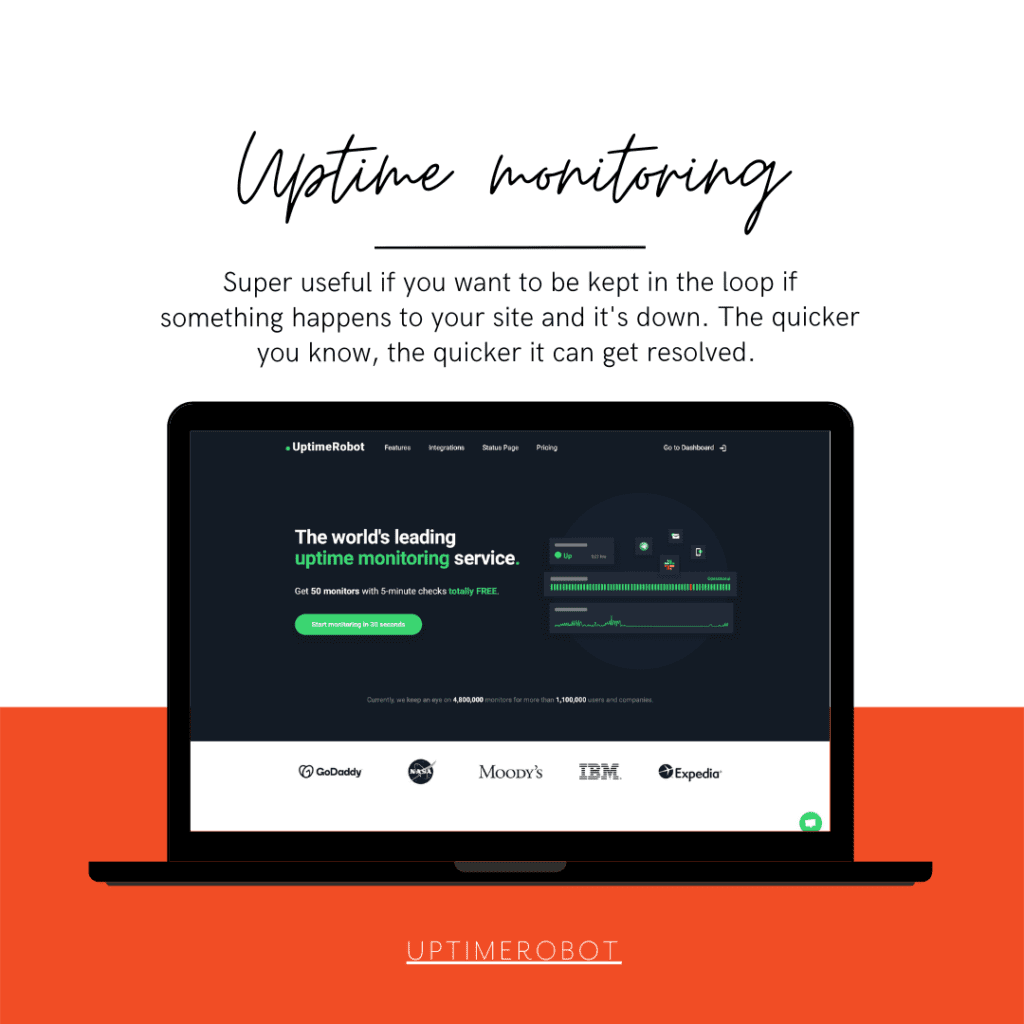
Do you know what will happen to your business if your website is down? Up to 30% of all visitors will abandon your website if they can’t access it. This makes the reliability of your website extremely important to your overall success as an online entrepreneur.

No system is perfect, and websites will go down at some point for some reason or another. What’s important is that you find out and are able to react quickly. We monitor the websites we host for clients for exactly that reason. This site monitor is free for up to 50 sites, making it great for SMEs to ensure their online presence is being watched out for.

There are lots more tools out there, of course. And I already have a list in mind of some services that make SEO and the finer details of your website so much easier.

Let us know if you want to talk more about your website design, development or hosting, we will be happy to help.

What-do-brands-do

What brands do in a crisis

Another day in isolation, another day where brands are being made or broken by how they react, how they communicate and how they connect to us during this outbreak. 

I get really annoyed now by all those automated funnel sales emails that are coming through fishing for subscribers. The jolly sales talk of marketeers trying to tell me how to make my money with PPC and FaceBook advertising, or how they can set up retargeting pixels for me to work wonders. Put it on pause! My whole world is… 

It’s house hold brands as well though that show their true nature, good and bad.

Wetherspoons informed workers that they will no longer be paid, saying he would only start payments again once the Government’s scheme to cover 80% of wages is in place – despite the Treasury saying that grants for salaries could be backdated to March 1.

Sports Direct is highly criticised for their handling of staff safety amidst their belief that the shops should stay open despite all the dangers this poses to staff and shoppers. 

Apple, on the other hand, has been able to source 10M masks for the US and millions more for the hardest hit regions in Europe. In his tweet, Tim Cook shares the news. 

BrewDog, an independent distillery in Aberdeenshire, UK, has used its distillery to produce hand sanitiser and is giving it away to local charities and the community. James Watt, Founder of BrewDog, said on Twitter: “We want to do all we can to help everyone get through this difficult time.”

German manufacturers Rotkäppchen and Jägermeister are helping out by supplying ethanol for the production of desinfectant.

For those of us home schooling, various TV personalities are offering their time for free to keep kids active and help to educate them. Carol Vorderman has opened up her online maths school for free for the duration of the school closures: https://www.themathsfactor.com/

Joe Wickes is doing daily PE class workouts at 9am on his Youtube channel: https://www.youtube.com/watch?v=K6r99N3kXME

David Walliams releases a free audio story on his website every day for 30 days and there are lots of free activities/resource packs to download: https://www.worldofdavidwalliams.com/elevenses/

Darcey Bussell is giving free dance classes on her DDMIX FaceBook page. Audible has made hundreds of stories free during the lockdown. https://stories.audible.com/start-listen

Supermarkets are doing their best to make shopping easier for the elderly by having special shopping hours amidst panic buying and empty shelves.

There is so much going on, good and bad, and these just a few samples of how this crisis is not just a test for the operations side of companies, but also for their brands. We are vulnerable, we are uncertain and we lean on those we can rely on – be it in our neighbourhood via WhatsApp groups, via social media or phone calls. We don’t just seek the comfort (albeit mostly remotely) of our families and friends, it’s brands we look to for reassurance just as much as we look at our politicians and celebrities.

It’s judgement time and brands – personal or business – have the amazing opportunity to use their profiles to help people not just with products but mentally.

Of course there is one brand that should get a knighthood if there was such a thing. The NHS is doing amazing things. It really is a people brand. I am humbled by the hard work they do, the impossible situation they find themselves in and the ongoing commitment they show to our health. It’s absolutely awe inspiring. There are countless examples of their efforts to campaign for #StayAtHome…

I have been lucky to work with quite a few NHS hospitals / operations on branding and web projects, so it’s pretty emotional for me personally at the moment because I know the people that work there are struggling right now and there is not much I can do. I’ve volunteered to help along with 400,000 other citizens hoping that I can give a little bit back myself but I am afraid it will only be a small drop on a hot stone.

The NHS – for me – is definitely one of the brands that seems to be genuine and authentic from the inside out. Something every business should aspire to be from a human point of view.

I hope we will get through this together and have a chance to say a big THANK YOU to all those brands that are on our side right now.

attitude, brand loyalty, brand management, Brand Managment, brand message

Admin? The stick of creative work.

I filled in a business health check and one of the questions was how you cope with admin.

It’s the dread of most businesses – it has to be done, someone has to do it, and sadly, being a creative doesn’t mean you can get away with ignoring those excel spreadsheets, accounts packages, quotation and estimation work, and keeping track of those expenses, invoices, subscription renewals and travel receipts.

You can run, but you can’t hide and your next quarterly VAT might well turn into a nightmare orchestrated by Mr. Admin. I’ve been there, believe me, and it’s honestly far more ugly and stressful to pull a late nighter trawling through email histories and getting accounts in order than managing it a little bit at a time.

I’ve developed my own little rule of thumb… (love that expression). I can’t start creative work until the admin is done. That’s on 4 out of 5 working days. On the 5th day, it’s the other way around. It’s creative first, and potentially no admin at all (unless there’s print buying to be done as part of a creative brief).

This may sound petty and not suit everyone, but I need a clear head to think outside the box and worrying about that email I need to reply to will just hang over me and stop me from thinking freely.

And doing a little bit every morning first means there isn’t much to catch up with.

It also allows me to happily go into what my colleague Steve calls monk mode. In monk mode you just focus, ignore everything else, email, chat, news of another calamity, and you buckle down to concentrate on what you’re working on, nothing else.

I love being in monk mode. It takes the guilt out of not reacting to every inbound query in whichever form whilst I’m dedicated to what I’m working on and usually results in a much faster output than trying to do too many tasks at once. There has been a time when we all functioned without instant responses, and it’s ok to wait a couple of hours for a reply…

I’m obviously bound to urgent deadline requirements and sometimes it all goes out the window and I need to do an after hours catch up, but generally, by changing my attitude towards those more technical tasks and seeing them as the stick that gets me my yummy creative carrot, we’ve become quite good friends (Mr Admin and me).