Author: admin

brand guidelines for consistency

Brand Consistency: More than Just a Logo

In a world brimming with options for virtually every product or service, how do you make your brand stand out? Brand consistency is one of the crucial elements in achieving this, but it is often overlooked or misunderstood. Branding is not just about a memorable logo or a catchy slogan; it’s an integrated strategy that involves several aspects, from tone to visuals to customer experience. But why is brand consistency so important for both emerging and established businesses?

What is Brand Consistency?

In essence, brand consistency means maintaining a coherent and unified presentation across all platforms and touchpoints where your business interacts with the public. This could include your website, social media, advertisements, products, customer service, and even the way your team communicates internally.

Why Does Brand Consistency Matter?

Recognition and Trust

One of the most important reasons for maintaining brand consistency is the role it plays in customer recognition and trust. When a consumer sees the same colors, typography, and images across your marketing materials, they are more likely to remember your brand. Over time, this builds trust and creates a sense of reliability around your products or services.

Competitive Edge

Consistent branding also helps you stand out in a crowded marketplace. When a customer is overwhelmed by choices, they are more likely to opt for a brand that they recognize and trust. Your unique brand elements make it easier for customers to spot you amid a sea of competitors.

Emotional Connection

Beyond the practical aspects, consistent branding also helps in forming an emotional connection with your audience. Humans are creatures of habit; we find comfort in the familiar. When a brand consistently delivers the same message and quality, it reassures the customer and strengthens emotional ties.

Streamlined Marketing Efforts

From a business perspective, brand consistency simplifies the decision-making process when it comes to marketing efforts. A well-established brand guide means that your team doesn’t have to reinvent the wheel every time they create a new campaign or update social media.

Adds Value

Consistent branding goes beyond mere recognition; it adds value to your business. Apple is a prime example of this. Their consistent branding efforts over decades have led to a perception of quality, innovation, and luxury, allowing them to charge premium prices for their products.

How to Achieve Brand Consistency?

Establish a Brand Guide

A brand guide serves as a blueprint that outlines the parameters of your brand’s visual and communicative elements. This includes specific color codes, typography, tone of voice, and even guidelines on imagery and photography. I’ve recently completed the design for four brands of the newly opened Hyatt Regency Blackfriars in London and the brand guide is a proper book – but as this is a brand with lots of different suppliers, it’s absolutely vital to ensure consistency in the use of the new brand identity.

Consistent Communication

The whole subject of brand consistency applies not just to external communication but also internal. Everyone on your team should be aware of and aligned with the brand’s mission, vision, and values. Internal workshops and good on-boarding sessions for new team members can help everyone start singing from the same hymn sheet – and knowing why…

Regular Audits

With changing marketing channels and trends, it’s essential to regularly audit your brand’s presence across all platforms to ensure consistency. A brand manager can focus solely on making sure publications, PR, internal and external messages follow the ‘holy brand grail’ – but for smaller businesses, again, internal workshops or training sessions and mini brand audits can be valuable resources to help create this consistency from the ground up.

Leverage Technology

Use digital asset management systems to store and manage your brand’s assets. This ensures that your team has access to up-to-date resources, reducing the likelihood of inconsistencies. There are lots of different software products to use – from brand asset libraries to template creator SaaS offerings; the choice is yours.

Be patient… consistency takes time.

Brand consistency is not a one-off task but an ongoing strategy that requires attention, effort, and investment. When executed correctly, it adds significant value to your business, making it more memorable, reliable, and engaging. As Jeff Bezos once said, “Your brand is what other people say about you when you’re not in the room.” Make sure they’re saying what you want them to say by investing in brand consistency.

Brand name generation for international businesses

How to come up with a brand name that works internationally as well as locally

Creating a brand starts with a name. But finding the right name, especially one that works internationally as well as locally, can take time and effort. Here are some tips on how to come up with a brand name that works internationally as well as locally. (Coca-Cola launched an entire website to explain its new branding strategy named “Tribe.” The company also released a video explaining the meaning of the word tribe and why it was so important for their new direction.) Creating a brand is more than just coming up with a name for your business or product; it’s about understanding what makes it unique and memorable and what you want people to intuitively associate with when they think about your brand.

Know your audience

Who is your target audience? What do they want? What are their needs? These are the questions you need to ask yourself when deciding how you want to brand your company. These are the people you want to engage with and connect with your product or service. You want to make sure the name you choose resonates with them and is easily understood within the culture they are in. For example: If you’re looking to brand a product that is going to be sold internationally, making sure it has an English name will make it easy for everyone to understand what it is. You don’t want to choose a name that only works in English like some other languages might have trouble pronouncing or spelling it correctly. You also don’t want to pick a name that is too long, as that may make it harder for others to remember or spread the word about your product.

Find the right words

Once you have an idea of who your product or company is targeting, you’ll want to start thinking about the words you want to be associated with your business. Here are a few things to keep in mind when you’re trying to find the right words for your business or product. – What is your product or service? This is the first thing you’ll want to figure out. What do you want to sell? – What is the problem your product solves? Next, you’ll want to identify who your product solves the problem for and why they would want your product. – What is your company culture? Finally, you’ll want to think about how your company culture is unique and special. – How do these things tie in together? You can then start to piece together the words that fit your product or service best.

Check the vocabulary

Now that you have some words in mind, it’s time to double-check those words are not already being used by another company. To do this, you can use a search engine like Google. Type in the name of the product or service you’re trying to sell. Then, scroll down to the “Autocomplete” section. This will show you the top words that people have searched for before or are searching for now. This is a great way to make sure that your product name doesn’t show up in the same list when someone searches for the product. Another way to check the vocabulary is to type those words into a search engine and then click on the “Images” tab. This will show you if the image search results include any results for competing branding but it will also help see if there is perhaps any unwanted association with the word. It may be an idea to work with different native-speaking researchers for international brands to ensure you avoid the pitfalls of brand names for foreign markets. There are lots of examples of what not to do on the internet, so make sure you avoid mistakes by not considering cultural and language references.

Narrow down your choices

To help find the perfect name, here are a few different things you should keep in mind when making the final decision. – How does it sound? Does it flow nicely when you say it out loud? Does it fit the mood you want to create? – Is it easy to spell? You don’t want to choose a name that is too long, as that may make it harder for others to remember or spread the word about your product. – Is it easy to remember? You want to make it easy for others to recall your brand name. – Does it fit the culture and language you are marketing to? You don’t want to choose a name that is too complicated for others to understand.

At some point, you should be able to pick a name that will help, not hinder, your brand. Remember, whilst the name is not everything, it is an important part of the sum of the brand and it will come to life in the brand identity design – so pick wisely!

JBC-Skills-Banner-stand-design and print

It’s a wrap.

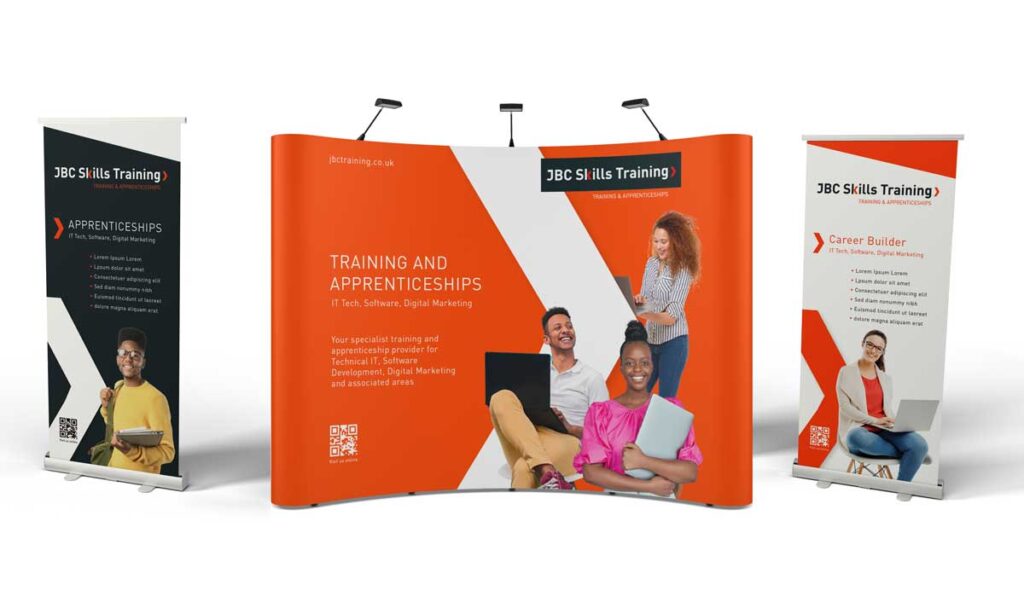
This year we’ve been able to get back to designing for actual ‘live’ events, with exhibitions starting to make a come-back after ‘you know what’. It’s been great working on different roller banner designs for companies trying to attract visitors to their stands.

Here’s just a couple of examples from recent expos. What was important in both instances was to keep it simple, to make messages clear and easy to read and to link to the websites for more information. Whilst there used to be a notion of having to tell just about every little detail on one single page, ending up with over crowded and frankly ugly looking visuals, we now have the luxury of being able to bridge from the physical to online with QR codes and similar scannable links.

You can use the canvas to create a visually powerful introduction and guide people to more info online. It’s so much better than having to squeeze in too much to give a design layout a chance to breath.

If you’d like some fresh banner designs, get in touch!

Tool tip

Tool tip for web videos.

Don’t let your visitors wait for videos to load on your website. They may never get to see it if it takes too long to load – especially on mobile. Here is a quick video compression 101. 

What is Video Compression?

Video compression is the process of reducing the size of a video file, so that it can be stored more securely and quickly transferred across the internet.

How Does Video Compression Work?

Video compression can be divided into two main categories – lossy and lossless. Lossy compression algorithms reduce the size of the video without losing any information, while lossless compression algorithms completely discard any information that is not necessary for playback.

What are The Benefits of Video Compression?

The benefits of video compression include:

1. A smaller file size – video compression can result in a smaller file size, which means that your video will load faster on devices and be more secure online.

2. Increased security – video compression can help to protect your video from being intercepted or stolen.

3. Reduced bandwidth – video compression can help to reduce the amount of bandwidth required to load your video.

4. Reduced storage space – video compression can help to reduce the amount of storage space required to store your video.

5. Reduced loading time – video compression can help to reduce the amount of time required to load your video.

How Do I Optimize My Video For Compression?

There are a few things that you can do to optimize your video for compression:

1. Make sure that your video is properly shot – videos that are shot in high quality will typically take more time to compress, while videos that are shot in lower quality will typically compress faster.

2. Avoid scenes with a lot of movement – these will typically take more time to compress, while scenes with less movement will typically compress faster.

3. Keep your video frame rate as high as possible – higher frame rates will typically result in better compression.

4. Use lossless compression algorithms – lossless compression algorithms completely discard any information that is not necessary for playback.

5. Use a video compressor – a video compressor can help to optimize your video for compression, and can also help to reduce the size of your video file.

When you deploy a video on the website, make sure you enable inline viewing on mobile.

Video compression is a complex and time-consuming task. Some video codecs are designed for encoding video for streaming, while others are designed for storage on media servers or for playback on devices such as phones and tablets. However, the latest video compression standards allow videos to be encoded in a way that allows them to be played inline, without having to download or play the entire video. This makes videos more accessible and faster to watch on mobile devices.

Video compressor websites

cloudconvert.com

CloudConvert.com is a video compressor that offers users a variety of features to help them compress and optimize videos for different devices and platforms. Some of the features include H.264 encoding, noise reduction, and color correction. The software also has a user-friendly interface that makes it easy to customize video settings for different formats.

And you can optimise 25 clips per day free of charge.

clideo.com/compress-video

Clideo is a video compression tool that allows users to compress and optimize videos for different platforms. With Clideo, users can compress videos for YouTube, Facebook, and other social media platforms. The tool offers a variety of compression settings, allowing users to customize the video for each platform. Additionally, Clideo offers automatic encoding options for users who do not have experience encoding videos.

veed.io/tools/video-compressor

Veed is a video compression tool that allows users to compress and optimize videos for different platforms. The tool has a variety of features, including an automatic quality control algorithm, an easy-to-use interface, and support for multiple file formats.

fastreel.com/video-compressor.html

FastReel is a video compression tool that can reduce the size of your videos by up to 50%. It offers a variety of features, such as lossless compression, audio encoding, and watermarking.

Let us know if you need any help with your website videos.

brand strategy and design execution humour

Missed opportunity alert

I love working on brand strategy and design projects, and I’ve always seen the two as interconnected. For me, graphic, web or interior design are all tools to bring a company’s message to life in many different ways. Which is why I am on the lookout for the good, the bad and the ugly when it comes to business designs.

Take this one… a sponsored traffic island. Surely, this is a great opportunity for brands to have their company name and logo seen by all the passing traffic. What’s not to like – especially in the centre of Birmingham! It’s a great example of executing a company’s brand strategy and design project in real life – or that’s the theory at least.

Well… I would say well done, and even ignore the fact that the sign itself is not exactly inspiring or eye catching, but definitely not when it looks like this!

The link between brand strategy and design in situ on this crazy roundabout
Would you want to buy a bed or mattress from someone that surrounds themselves by mess?


Your strategy and how you design are connected in many ways

You may think what’s that got to do with my brand management? I think it’s got everything to do with it – and whilst it may be a tiny example of a careless approach, it’s a good one for why it’s important to consider different effects of designs on your business and brand building efforts.

It may be that this company has paid to be on the sign on the roundabout, but it’s the council’s responsibility to keep it tidy, but anyone looking at it, whether they are in the brand strategy and design field or not, won’t care about who should have gotten the lawnmower and dustbins out. It just reflects badly on the brand. It also doesn’t help the reputation of the town council, but it’s not their name on the sign.

You wouldn’t expect the brand owners to manage the island themselves, but they could have picked up the phone to whoever sold them the spot and complained. And if that didn’t get a result, withdraw the sponsorship and ask them to take the sign down. I would imagine there must be some sort of clause in the contract that stipulates what sponsoring an island means – and when an island is no longer an island, but a pit.

Looking at it another way, there could be a branding opportunity for someone dealing with waste disposal. It would at least create some connection between the state of the surroundings and the brand advertising on site. You’d just hope there was then a campaign linked to it which meant they would actually sponsor the cleanup after a few weeks and document it on social media and their website.

It’s all connected – brand strategy and design execution

Working in a design studio in Sutton Coldfield means we naturally become involved in all sorts of marketing projects for local companies that are looking to scale up, reach more clients and improve their services. I remember creating wooden A-boards with protected, changeable information sheets for Lichfield Cathedral. They could have just used on the old, existing ones – but they understood that it all fits together, and having even those external bits of signage or advertising treated like an important part of your brand adds integrity.

Signage in particular is so often a missed opportunity. We all know the box standard fonts, with letters sizes to the max without any breathing space, on glaring plastic shop front panels without any character or brand style. Having been in the business of brand strategy and design for about two decades now, it saddens me to see that we still can’t manage to make high street signage for independent shops attractive.

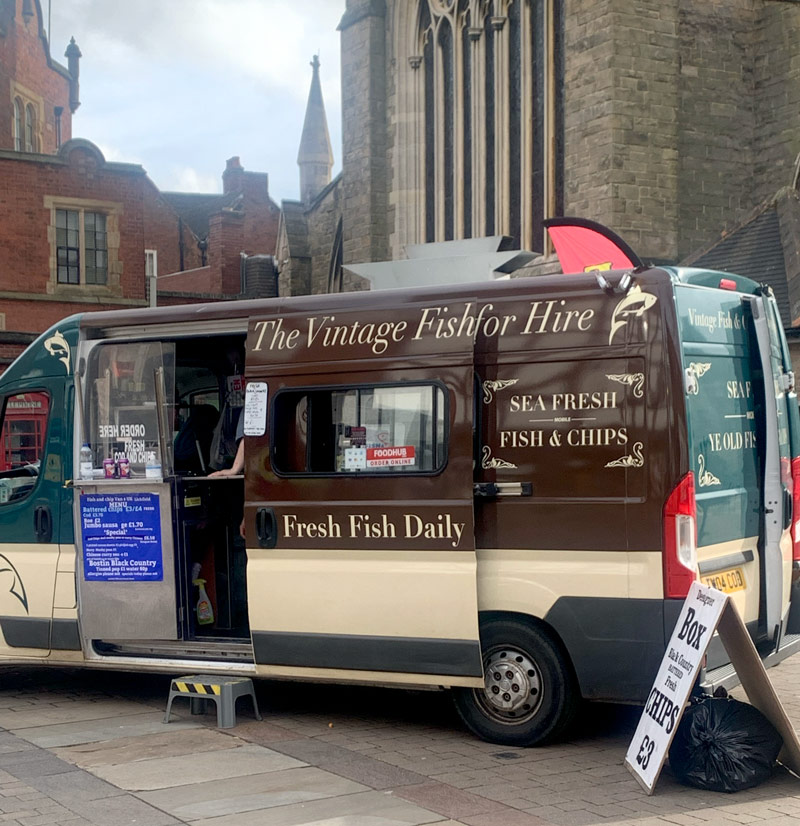
Talking of Lichfield, here is another lovely little example of an execution that has gone just a bit fishy.

Vintage fish for hire! Anyone?

It’s a bit of a giggle, and it’s not the end of the world – but again, it’s a missed opportunity. What else could have been on those doors that actually results in a meaningful message when you slide it open? It could be such a fun detail of brand design and make the business stand out not just with their products…

In my mind it doesn’t matter how big or small you are as a company. It’s good practice to decide on your brand strategy and design accordingly. And it can be fun, creative and innovative even if you don’t have crazy corporate budgets, just by thinking and planning carefully.

As for sponsoring anything – make sure there is a link between what you are putting your name on and what it represents… you may be better off without it.

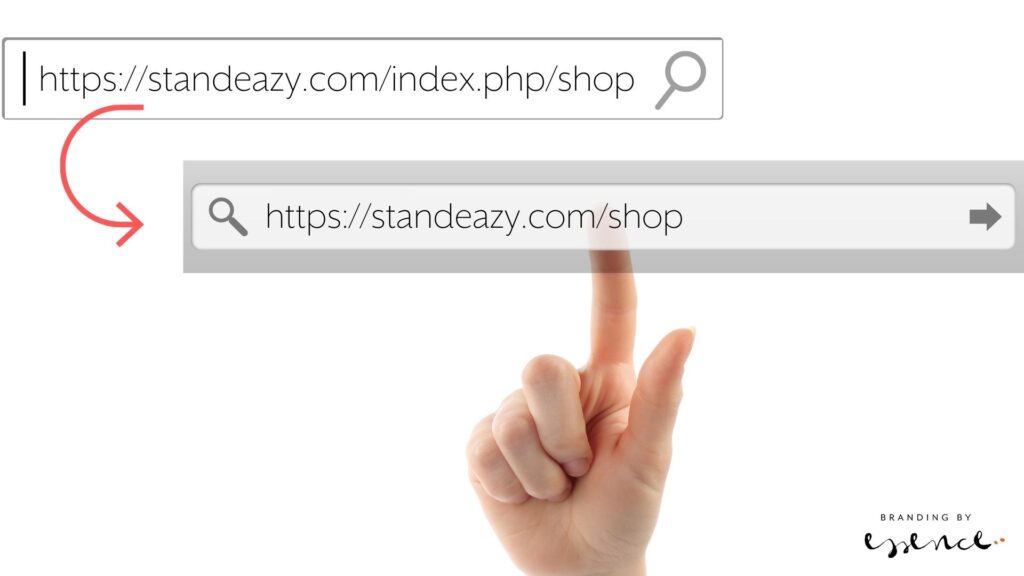
Hand pointing to URL that has been rewritten by Joomla

Joomla 4 – how to get rid of index.php from your URLs

I’ve just started using Joomla 4 for some new websites and it’s just as easy to use as the older versions. Some things are a bit unexpected, but basically it’s the same as before once you find where everything is packaged.

So just a little note for how to get rid of the .index.php from the URLs so they read well for humans and those pesky search engines.

Step 1 – Enable Use URL rewriting in Joomla 4.

From your dashboard, top right there are system short cuts. Find Global Configuration and scroll down until you get to the SEO settings. Enable URL Rewriting.

Step 2 – Change the htaccess file on the server

Get to your files on the server, via ftp or a file manager, and find the htaccess.txt file in the site root folder. Rename it to .htaccess. In my install, that was already there, so I renamed the htaccess.txt into something else and that did the trick.

The result: Beautiful short URLs.

Enjoy!

The rule of five beyond your five a day

So I’ve got three boys aged 13 and younger. If all these years as a parent have taught me something for business, it’s that little and often works better than procrastinating and facing a huge heap. How did my family life make me come to that conclusion? 

Take bedrooms. Even thinking about them left to their own devices fills me with fear and utter despair. I know I wasn’t great as a child (my parents later concluded that I just had my very own way of organising that didn’t quite match the adult world) but those three are a level above. 

The words wading through stuff gets new meaning. So how can you motivate your seven year old bedroom dumpster dive loving thespian to clean up his act? 

Or laundry. You’ve gone through hours of repeat soak, wash, rinse cycles to get it all done, then fold / iron basket loads and – this is where it remains. The fruit of your labour stacked up but never touched to be put away into above mentioned kids’ wardrobes. Yet we somehow need to teach them independence and self-sufficiency (or house chore slavery only goes that far). So what do you do?

In comes Steve’s rule of five. It’s one of many little rule nuggets I’ve adopted from him over time. Every day, the kids have to pick up just five things from their bedroom floor before they can do whatever they asked if they can do it. Every laundry, they get a small pile of about five items to put in their drawers. Instead of battering them into prolonged activities, they can spend just five minutes doing whatever practice – can be more, but five is ok. And they have to go outside just for five minutes no matter what the weather (which is then never just five once they are out and about)… 

The rule of five works great for business. It takes the scariness out of the scariest task list. Prioritise and focus on the top five and you have a good chance to get them done. Do little bits of admin every day so end of month isn’t a daunting bank reconciliation exercise.

It doesn’t have to be exactly five. The point being that little but regularly is far more manageable than avoidance with the inevitable mountain to climb in the end. And whilst it may seem never ending, I much prefer this way to the alternative of sporadic exhausting long slogs. 

Plus little but often keeps you practiced and five a day is a thing we can all do (even the government says…) 

Naming of brands

A name, a kingdom for a name!

Business is about connecting with your customers and the best way to do this is through something they can relate to: a brand name. But in today’s crowded marketplace, it’s not easy to stand out from the crowd. Your brand name should be clearly defined, memorable, and unique — but that’s easier said than done. Here are seven steps you need to take in order to create a great brand name for your business.

Know your target audience

One of the most important things when building a brand is knowing your target audience. It’s hard to know what your audience wants if you don’t know who they are and what they like.

The words you use are important. They can help you evoke emotions and move your ideal clients to action. If you have done the research, no one knows your client better than you. Your brand name is a chance to show it. Choose a name that fits neatly into your brand strategy. Don’t just create a list of cool-sounding words haphazardly – your entire plan should be cohesive.

Research the competition to get an idea of what’s already out there

Before you get started, you should research the competition. As a minimum, run name search engines and figure out who’s already being mentioned in online sources. There are plenty of free tools like Nameberry to gather this information for you, especially for local markets. When researching your competitors, search their full domain names, not just their company name. This will help you get a feel for what their marketing team is working on – and how you can differentiate yourself from them.

Respect copyright laws. This requires time and research but can avoid copyright infringement lawsuits. You could also register your own brand name’s copyright (internationally) to protect it. Check out Burley Law who specialise in IP law and all things related to get you off to a good start.

Take a global look at it

The name of your brand matters. It carries weight, it carries meaning, and it carries global implications. Whether this is your goal or you simply don’t want to rule out the possibility of tremendous success, it may be time to consider what global implications your choice of name may have. Is it divisive? Is it offensive? Is it too difficult to pronounce in another language? These are all things that you should consider before choosing an appropriate name for your brand.

Test out your business name

If your business name is a made-up word, try saying it a few times out loud to see how it feels. If it doesn’t sound natural, it’s not a good name for your business.

Always remember your brand’s main purpose. What does it represent? Ideally, the name you choose should convey the same positive feeling you want your brand to be associated with, incidentally creating trust and confidence. Moreover, in order to be memorable, make sure the name is easy to pronounce and easy to type into a search engine.

123 reg Go Daddy Net Names

Choosing the right domain name is crucial. Consider how your domain name is viewed by potential customers and try to make it as consistent as possible with your brand. When you choose your domain name, think of the customer perspective. In addition, a domain name search may help you settle on a good domain.

There are lots of domain registrars. You can’t really go much wrong. I always advise my clients to keep the domain name with them rather than letting an agency manage it – after all, it’s a very important part of your brand and you should be in control.


Your brand is an identity that people use to define, speak about, and recommend your company. It’s important to use creativity and resources to name your brand. Your brand’s success is directly proportional to the amount of research, thought, and resources put into its creation.

Sutton Coldfield design studio

What running a Sutton Coldfield design studio & brand consultancy taught me

It started with some short cuts…

Everybody has different paths to their chosen career. And everyone will have different experiences with self-development professionally and personally. Education has always been important to me as a designer. From the moment I entered the creative scene in London, to now where I am the creative director of a Sutton Coldfield design studio, keeping myself skilled-up is a key element of my working week.

Graphic design and brand consultancy may be based on talent, but it’s hard to be a good designer without additional skills in software, technology, understanding businesses…

Sutton Coldfield design studio and brand consultancy

When I was an artworker at a London design agency, every lunchtime I stayed in and basically hacked on a scrap document to learn what could make my typesetting faster. Soon, I was the person that would know a shortcut key if there was one. It helped being recognised as a valuable team member and it felt like the right thing to do. Back then we used Quark, and Adobe was that new thing that made pdfs that would embed fonts, oh wonder! I guess I was lucky to start my career at a time when software started to change the creative industry in a storm.

Two years on, I was studying at Central Saint Martins whilst working freelance. I’d spend most of any spare time in libraries going through books about advertising, graphic design, interior design, typography, colour theories, human behaviour, communications – and how to run a business. 

Learning from running our Sutton Coldfield design studio and brand consultancy

As soon as I transitioned to working full time as a designer, it fascinated me how we’d end up with those briefs to design a brand identity. What If there was another way to shape that brand? So off I went again to Brunel University to do a course on brand strategy.

And on it goes – workshops, networking mastermind sessions, online tutorials… all the way to starting our Sutton Coldfield design studio back in 2005. To be fair, Essence is probably not a regular graphic design studio: Steven, the other half, is super tech-focused, our data meister and the man that taught me all about CSS, JS, JSON, HTML, how to troubleshoot, and how to comment on code. And I come from a highly conceptual, ideas-focused advertising background with a passion for typography, print technology, copywriting, and using photography to tell a brand story in different media. We like to call Essence a brand consultancy for those reasons.

Even now, more than 16 years in business here, my motto remains: ‘Every day is a school day’. My biggest ongoing learning challenges are UI / UX, tech, automation, and SEO-related because that’s what my clients need help with beyond solid graphic design and branding. There’s so much out there nowadays, even here on social channels, the learning world is your oyster. 

To keep improving your skills has nothing to do with your field of expertise – whether you are a business coach, interior designer, marketing manager of a hotel or restaurant, a shop owner selling products to the trade or consumer – or you are a brand consultant and graphic designer, like myself – it is vital to keep learning.

What running a brand consultancy and Sutton Coldfield design studio taught me is not just about business methodologies, project- and client management, cashflow planning, having pricing structures, sales and marketing plans, a vision for the brand, and a comprehensive service setup… It taught me that everything is in flux and you have to move with it. Industries change. Trends change. You change and your experience can greatly enhance what you sell and how you sell it. Keep looking around and up from your work to see what else is out there. It will be time well-spent.

Brand consultants brochure

A Graphic design studio and a brand consultancy – what’s the difference ?

Ever wondered what the difference is between working with a studio or a consultancy? You may be looking for a local partner to help you with your new website. Or you are a start-up with a vision, but not quite sure how to let the world know about it. Or maybe you are an established business that simply needs to have some new brochures designed. Who do you approach?

There are lots of commonalities and some may say it’s pretty much the same as any full-service design agency, but there are nuances that may be worth considering.

A graphic design studio provides print and design services to clients, such as the creation of brochures, flyers, stationery, signage, etc. A brand consultancy, on the other hand, provides a range of services that are not primarily focused on design and artwork. These services can include brand strategy, naming, packaging, content strategy, and marketing – as well as graphic design.

Brand consultancy vs graphic design studio07

Brand Consultancy vs Graphic Design Studio

Graphic design studios offer professional and comprehensive design services, such as print design, web design, business branding, logos, and creative development. The clients are the ones who come up with the idea and finalise the creative concepts, while the studio employees craft them into reality.

In general, a graphic design studio will work with a client to produce a design or product, then hand it over to the client to use.

A brand consultancy will help you set up an effective brand strategy. They are focused on broad-based branding with the aim of enhancing the image of your company. This will involve brainstorming the business and identifying branding opportunities. You can’t have a strong and effective brand without a strong strategy that will drive the value proposition of your brand. It will inform every decision that your business (or yourself) will be seen to make.

The consultancy will help in the process of defining the right brand identity concepts and designs, typography and colour schemes, designing packaging, exhibition marketing and developing social media or advertising campaigns for your business.

Brand consultancy strategy

Of course this is the point when the lines start to get blurry.

Every good brand consultancy will be able to see through your project from conceptions and strategy to the actual production of the outputs, which makes it synonymous with the services from a graphic design studio. Equally, good graphic design studios wil gladly try their best to accommodate any strategic requirements. After all, good designers will love a challenge and they will want to see their clients succeed just as much as brand consultants, so it’s a bit down to semantics and individual expertise.

If you already have a communication strategy, with a comprehensice brand and corporate identity guide, (ideal) customer personas, marketing strategy and basically a brief for a specidic list of items, you may well find a graphic design studio is the right fit for you.

If you are not sure about where your business is in the market, where you want it to go and how you are going to get there, working with a brand consultancy could be a good step to ensure you are confident with the materials you are producing – and with a long-term vision in mind. Because the creation of certain brand touch points (print or online brochures and literature, websites, membership portals, loyalty programmes, interior designs etc) is just one element of the work, special attention is given to the impact any creative outputs have on the brand itself.

It’s a step before the visual drawing board that is often forgotten, yet so important if you want to build good foundations for your business.

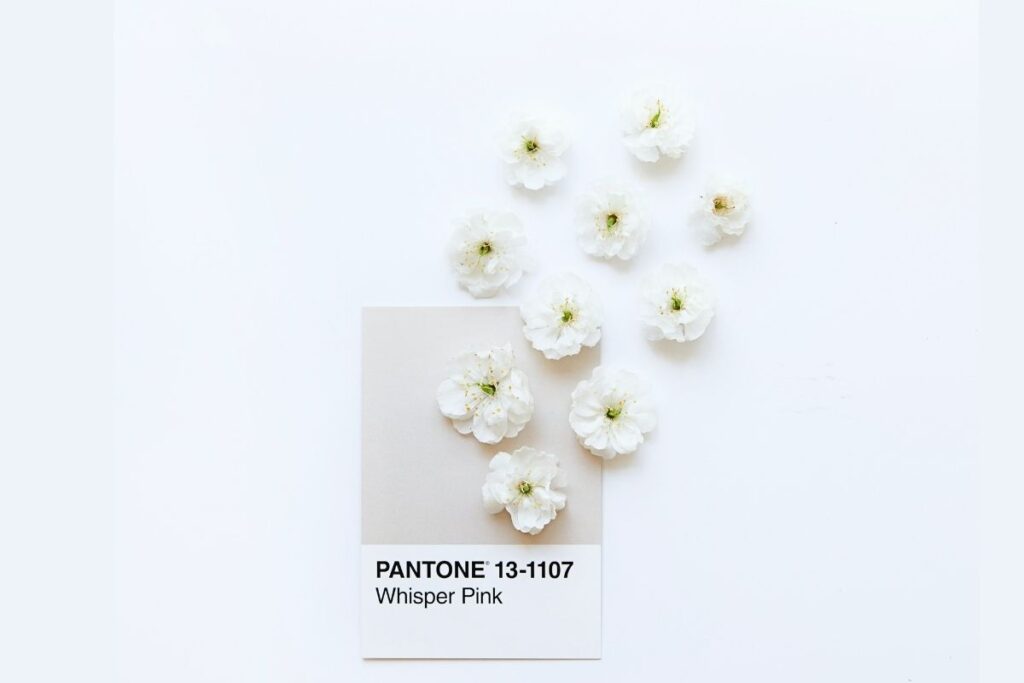
Pantone swatch part of branding process

So how do you pick?

Choosing between the two boils down to a few key factors. Consultancies have highly skilled graphic designers that can work closely with businesses to provide services that might not be suitable for smaller businesses. Consultancies often specialise in certain industries, offering the added benefit of getting brand advice from a seasoned professional.

Consultancies work with branding specialists to handle some of the more sophisticated tasks such as the creation of logos and brand identities. They will have a team of experts for online, print and social media design projects, brand photography and copywriting – after the strategy is in place. Just like graphic design studios, they have a network of suppliers in the print, adertising and exhibition industry, helping their clients to get the best finishes for their brand literature.

A graphic design studio should also be able to work well with any client to help them get the best out of their print and web design. They may even work with a brand consultant to bridge the strategy gap in their services, which brings me back to the blurry lines.

Ultimately, it’s probably down to personal choice. If you are hunting around your local networks or the search engines, it’s worth looking at both –  listings for brand consultancy and graphic design studio – and then let their portfolios, websites and customer service speak for themselves.

The two can differ greatly in scope and experience. Naturally, a graphic design studio will offer graphic design services. A brand consultancy will also serve the needs of clients in other areas.

Therefore, it is essential to ensure that your chosen partner has the right skill set to support your business with the appropriate services, whether you identify it as design or branding. And if there are still any doubts, just get in touch with us and we can chat through your ideas and plans.