Category: Brand Management

brand guidelines for consistency

Brand Consistency: More than Just a Logo

In a world brimming with options for virtually every product or service, how do you make your brand stand out? Brand consistency is one of the crucial elements in achieving this, but it is often overlooked or misunderstood. Branding is not just about a memorable logo or a catchy slogan; it’s an integrated strategy that involves several aspects, from tone to visuals to customer experience. But why is brand consistency so important for both emerging and established businesses?

What is Brand Consistency?

In essence, brand consistency means maintaining a coherent and unified presentation across all platforms and touchpoints where your business interacts with the public. This could include your website, social media, advertisements, products, customer service, and even the way your team communicates internally.

Why Does Brand Consistency Matter?

Recognition and Trust

One of the most important reasons for maintaining brand consistency is the role it plays in customer recognition and trust. When a consumer sees the same colors, typography, and images across your marketing materials, they are more likely to remember your brand. Over time, this builds trust and creates a sense of reliability around your products or services.

Competitive Edge

Consistent branding also helps you stand out in a crowded marketplace. When a customer is overwhelmed by choices, they are more likely to opt for a brand that they recognize and trust. Your unique brand elements make it easier for customers to spot you amid a sea of competitors.

Emotional Connection

Beyond the practical aspects, consistent branding also helps in forming an emotional connection with your audience. Humans are creatures of habit; we find comfort in the familiar. When a brand consistently delivers the same message and quality, it reassures the customer and strengthens emotional ties.

Streamlined Marketing Efforts

From a business perspective, brand consistency simplifies the decision-making process when it comes to marketing efforts. A well-established brand guide means that your team doesn’t have to reinvent the wheel every time they create a new campaign or update social media.

Adds Value

Consistent branding goes beyond mere recognition; it adds value to your business. Apple is a prime example of this. Their consistent branding efforts over decades have led to a perception of quality, innovation, and luxury, allowing them to charge premium prices for their products.

How to Achieve Brand Consistency?

Establish a Brand Guide

A brand guide serves as a blueprint that outlines the parameters of your brand’s visual and communicative elements. This includes specific color codes, typography, tone of voice, and even guidelines on imagery and photography. I’ve recently completed the design for four brands of the newly opened Hyatt Regency Blackfriars in London and the brand guide is a proper book – but as this is a brand with lots of different suppliers, it’s absolutely vital to ensure consistency in the use of the new brand identity.

Consistent Communication

The whole subject of brand consistency applies not just to external communication but also internal. Everyone on your team should be aware of and aligned with the brand’s mission, vision, and values. Internal workshops and good on-boarding sessions for new team members can help everyone start singing from the same hymn sheet – and knowing why…

Regular Audits

With changing marketing channels and trends, it’s essential to regularly audit your brand’s presence across all platforms to ensure consistency. A brand manager can focus solely on making sure publications, PR, internal and external messages follow the ‘holy brand grail’ – but for smaller businesses, again, internal workshops or training sessions and mini brand audits can be valuable resources to help create this consistency from the ground up.

Leverage Technology

Use digital asset management systems to store and manage your brand’s assets. This ensures that your team has access to up-to-date resources, reducing the likelihood of inconsistencies. There are lots of different software products to use – from brand asset libraries to template creator SaaS offerings; the choice is yours.

Be patient… consistency takes time.

Brand consistency is not a one-off task but an ongoing strategy that requires attention, effort, and investment. When executed correctly, it adds significant value to your business, making it more memorable, reliable, and engaging. As Jeff Bezos once said, “Your brand is what other people say about you when you’re not in the room.” Make sure they’re saying what you want them to say by investing in brand consistency.

brand strategy and design execution humour

Missed opportunity alert

I love working on brand strategy and design projects, and I’ve always seen the two as interconnected. For me, graphic, web or interior design are all tools to bring a company’s message to life in many different ways. Which is why I am on the lookout for the good, the bad and the ugly when it comes to business designs.

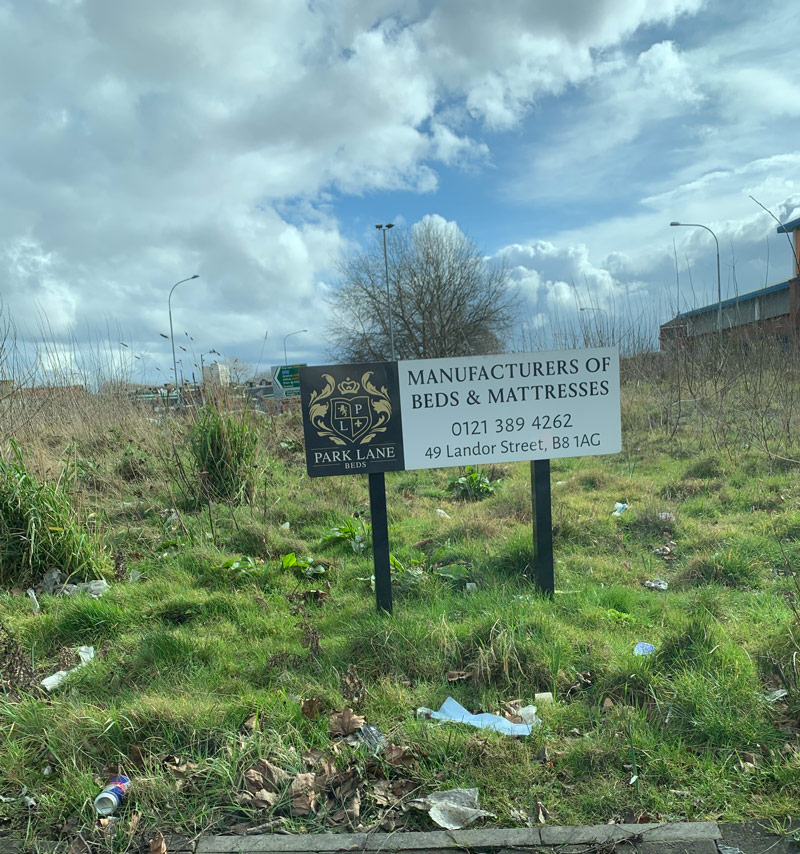
Take this one… a sponsored traffic island. Surely, this is a great opportunity for brands to have their company name and logo seen by all the passing traffic. What’s not to like – especially in the centre of Birmingham! It’s a great example of executing a company’s brand strategy and design project in real life – or that’s the theory at least.

Well… I would say well done, and even ignore the fact that the sign itself is not exactly inspiring or eye catching, but definitely not when it looks like this!

The link between brand strategy and design in situ on this crazy roundabout
Would you want to buy a bed or mattress from someone that surrounds themselves by mess?


Your strategy and how you design are connected in many ways

You may think what’s that got to do with my brand management? I think it’s got everything to do with it – and whilst it may be a tiny example of a careless approach, it’s a good one for why it’s important to consider different effects of designs on your business and brand building efforts.

It may be that this company has paid to be on the sign on the roundabout, but it’s the council’s responsibility to keep it tidy, but anyone looking at it, whether they are in the brand strategy and design field or not, won’t care about who should have gotten the lawnmower and dustbins out. It just reflects badly on the brand. It also doesn’t help the reputation of the town council, but it’s not their name on the sign.

You wouldn’t expect the brand owners to manage the island themselves, but they could have picked up the phone to whoever sold them the spot and complained. And if that didn’t get a result, withdraw the sponsorship and ask them to take the sign down. I would imagine there must be some sort of clause in the contract that stipulates what sponsoring an island means – and when an island is no longer an island, but a pit.

Looking at it another way, there could be a branding opportunity for someone dealing with waste disposal. It would at least create some connection between the state of the surroundings and the brand advertising on site. You’d just hope there was then a campaign linked to it which meant they would actually sponsor the cleanup after a few weeks and document it on social media and their website.

It’s all connected – brand strategy and design execution

Working in a design studio in Sutton Coldfield means we naturally become involved in all sorts of marketing projects for local companies that are looking to scale up, reach more clients and improve their services. I remember creating wooden A-boards with protected, changeable information sheets for Lichfield Cathedral. They could have just used on the old, existing ones – but they understood that it all fits together, and having even those external bits of signage or advertising treated like an important part of your brand adds integrity.

Signage in particular is so often a missed opportunity. We all know the box standard fonts, with letters sizes to the max without any breathing space, on glaring plastic shop front panels without any character or brand style. Having been in the business of brand strategy and design for about two decades now, it saddens me to see that we still can’t manage to make high street signage for independent shops attractive.

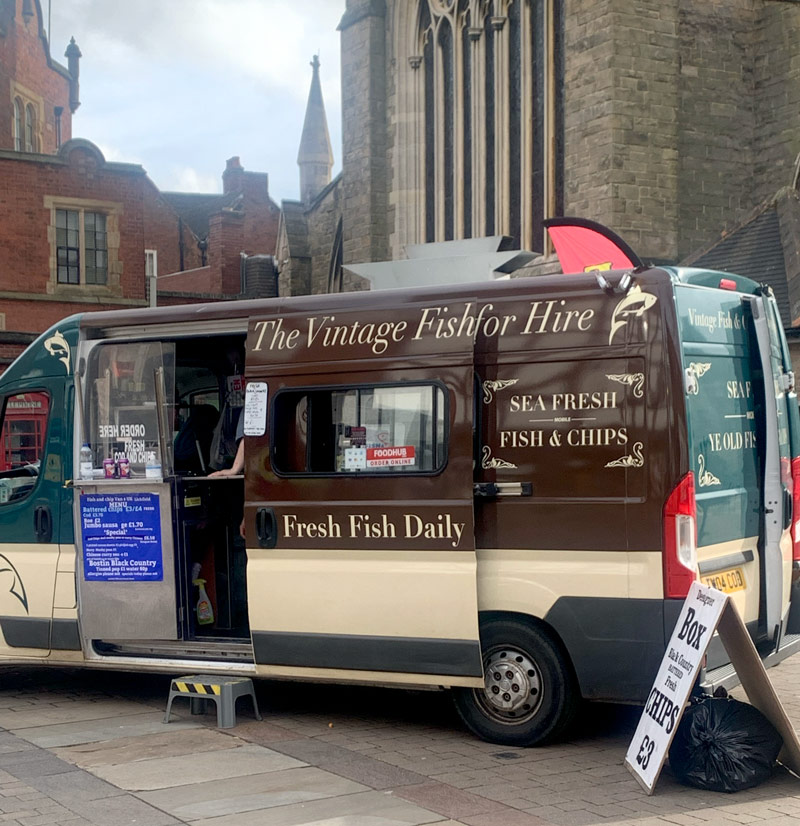
Talking of Lichfield, here is another lovely little example of an execution that has gone just a bit fishy.

Vintage fish for hire! Anyone?

It’s a bit of a giggle, and it’s not the end of the world – but again, it’s a missed opportunity. What else could have been on those doors that actually results in a meaningful message when you slide it open? It could be such a fun detail of brand design and make the business stand out not just with their products…

In my mind it doesn’t matter how big or small you are as a company. It’s good practice to decide on your brand strategy and design accordingly. And it can be fun, creative and innovative even if you don’t have crazy corporate budgets, just by thinking and planning carefully.

As for sponsoring anything – make sure there is a link between what you are putting your name on and what it represents… you may be better off without it.

Press kits and how to create them for media

What’s a media kit and how do I create one?

A media kit (or press kit) is a package of information relevant for the distribution of information for companies, charities or other organisations. They include facts about the people involved, the product, service or cause, as well as brand information, logos, images and visuals supporting any press releases.

Media kits are a great way for a company to show just how engaged they are with their audiences. Whether you’re a local business, a non-profit or a large corporation, having a media kit will help you stand out from the crowd. So how do you go about creating one? Here are 10 things you should include in yours.

Background

When it comes to building an audience, the media needs to know who you are and what you do. The ‘about us’ section should include all of the basics: who you are, what you do, where you are operating, when things are happening, why you do what you do and how you do it. 

Journalists are busy people, so keep the introduction short, to the point and consistent with your brand message.

Bios of your team

Include anyone in your team who is suitable for interviews, expert commentary, and speaking engagements. Make sure you include those members who are being mentioned in any of the press releases. Of course you include their bio in the press release together with the company information. It is however good practice to have them in the media kit as well.

Your products and services factsheet

This can be short bullets outlining your products or services. Think of it as factual descriptions similar to how you would present them on your website or in your brochures. Avoid to make it sound like marketing though. Highlight what makes you stand out from others. It’s also useful to include known Q&As here.

Case Studies

Case studies are a great way to demonstrate the success of your products or services. So without making this into a marketing document, here is a chance to include testimonials and recommendations from suitable sources. Again, be careful to avoid promotional talk and keep it factual and informative with the journalists in mind. 

Clients or associates

Obviously ask for permission first, but if they are ok, mention them as it adds credibility to your organisation. 

Recent press releases

When selecting press releases for your electronic press kit, it’s best to choose something that has been released within the last six months. Ensure that the heading of your press release is easy to grasp and includes any specific announcements the media may be looking for. 

You in the news

Already had some mentions in the media? Here is your chance to shout about it! If you’ve been on camera, show a clip – it will work well to show researchers and producers that you are not a newbie… The media tends to have a knock-on effect so showing  where you’ve been featured can be really useful.

Avoid any copyright issues by including the name of the outlet with a link to the article or clip. You are not allowed to add their logo without their permission. You also can’t bypass this by re-writing it or making it into a pdf or similar. Best to be straight as you don’t want media coverage to cause any issues. 

Your brand kit / multimedia elements

Include your logo and logo guidelines, any photographs, infographics, graphics or videos that will help illustrate what you do. You can link from a pdf to a shared folder like dropbox or google drive – or directly from your website. That makes it  easy for journalists to download them rather than having huge attachments. 

If you need help with creating your brand kit with your logo, fonts, colours and brand visuals, or a website that can accommodate this information, get in touch with us to see how we can help.

Awards / memberships / accolades 

If you have any recent and relevant awards, mention them. This doesn’t have to be an elaborate section, but it will again help with reputation building. 

Contact details

Don’t forget to have all your contact details in your media kit. This includes any social media channels where you are active, as well as traditional phone numbers, email addresses and names of the best person to approach with any questions or opportunities for coverage.

In essence, press kits should give journalists a flavour of your brand that contains all the relevant background info and gives them an appetite for more. It’s a collection  of visual and editorial facts about your company and gives journalists a helping hand if they see an opportunity to feature you. 

Marketing Ideas for Hotels and Hospitality in 2021

While 2020 took every business by surprise, it revealed a new shift in customer trends that are likely to continue in 2021. As we head into the New Year, now is the time for your hotel or hospitality business to re-evaluate their marketing strategies to increase sales, encourage customer engagement and create meaningful experiences that go beyond face to face marketing.

Our 2021 marketing ideas for the hospitality industry

Whilst we are still struggling with lockdowns, check out our top eight marketing ideas your hotel or hospitality business could look at. Some will work well to keep in touch with customers whilst localities remain shut. Others are great to put in place for when you are able to re-open.

Virtual tours for hotels and restaurants

1. Virtual tours of your property

If we’ve learned anything from COIVD-19, it’s that there are so many creative ways to use technology to engage your guests. Providing virtual tours of your property using technology, such as virtual reality, allows your guests to feel like they’re experiencing your property from the comfort of their own home.

You can take your guests on a complete walkthrough of your hospitality property, highlight your amenities and show the type of experience customers would have if they decide to visit. According to GuestCentric, properties that offer some type of virtual tour are clicked on ten times more than properties without this technology.

Interactive events for hotels and restaurants

2. Interactive event experiences

A great way to stay in touch is to offer extra value to your customers. While it’s easy to send over a brochure of your company and ask customers to book with you, why not also provide something extra to your customers lives. Think about creating a live event, where you can invite guests in-person and host online at the same time. This is a very effective way to create unique guest experiences.

For example, if you’re a restaurant that specializes in French cuisine, host a live event with one of your chefs to teach viewers how to make a traditional dish or drink at home.

You can allow guests to ask questions and make comments to create an interactive event. You add value to your customers everyday life, provide fresh content and establish yourself as the authority in the hospitality business sector and creating engaging marketing content.

Social media marketing

3. Take advantage of social media

Social media platforms are always changing and offering new ways for businesses to connect with their customers. For example, Instagram now offers reels. Reels are short videos between 15-30 seconds long that can be created to connect with your audience. Instagram also rolled out an online shopping platform, so you can connect your products directly to your Instagram, with relevant links to buy these products on your profile.

Especially during a lockdown, social media is amazingly versatile and effective to keep in the minds of guest and to attract new visitors in future. Showing people behind the scenes, your kitchen, gardens, any refurbishments, how you remember your hotel from the past year, take out menus and special event boxes all give plenty of content to share online.

Another great social media platform that has made waves this year is TikTok. With over 800 million users active on the platform, TikTok is a great way to reach potential customers through videos. Many brands participate in the trends users create on the application, finding ways to relate it to their own business. If a video is interesting, it may become “viral” and draw extra attention towards your brand.

Text message marketing for hotels and restaurants

4. Utilise text message marketing

Customers love when you can simplify things, and almost everyone uses a smart device, so utilising text message marketing is a great way to stay in touch with your guests. Once you are open again, you can use it to make life easier for bookings and extras.

No new technology is needed, and once they opt in, it will open a portal for easy communication. There are a variety of ways you can use text message marketing in your business to provide an exceptional experience to your guests.

You’re able to:

• Confirm reservations and provide instructions on how to get to your venue

• Allow guests to make requests, such as extra blankets or towels, directly through a text. You can use text messaging to confirm the request and let them know when their supplies will arrive

• Keep customers updated on activities or events that are being offered on your property

• Provide discounts, deals or offer extra services to your guests as part of your hospitality marketing plan

Loyalty programmes for hotels and restaurants

5. Create a loyalty program

Offering a loyalty program is one of the easiest ways to connect with your customers in the new year.

Creating a loyalty program can either be a physical or digital program that customers join when they visit. It will allow them to have benefits after spending money at your location. For example, hotels like the Hilton will let guests accumulate “points” every time they visit their properties. These can be used for free hotel stays and benefits like free upgrades.

If you’re an attraction or restaurant, you can offer a free meal or visit after a certain amount of times. Make sure to ask your guests for feedback on what they enjoy about the program. That way you can tailor it to fit your specific business needs.

Chat bit for hotel websites

6. Integrate chatbots on your website

Imagine being able to answer all of your customer’s questions and concerns at any time of the day, without having to even pick up the phone. One of the top marketing trends for 2021 is to integrate a chatbot on your website. A chatbot provides businesses the power to stay in touch with customers, offer support, and answer important questions, 24/7.

Chatbots are a pre-programed application that can answer customer questions and help book a reservation. They can even connect them with a specialist when a customer lands on your website. This application even has the ability to respond to customers in multiple languages with its automatic language detections.

Chatbots are game changers, especially for businesses who don’t have staff working around the clock.

They can also be useful to share your safety procedures to make your venue COVID safe and re-assure them by answering repeat questions about booking and cancellation policies, changing opening hours etc.

Influencer marketing for hotels and restaurants

7. Use influencer marketing

People are more likely to follow suggestions made by those they trust and look up to, instead of an advertisement. Influencer marketing is when you reach out to an individual that has an established

audience that matches your target audience, and offer to collaborate to promote yourself to their audience.

There are many ways you can do this including written content, videos, or social media posts.

To track if this method works for your business, companies will offer a discount code that the influencer will promote to their audience. Tracking the success of this code, and overall analytics of your website/business, will help you to track the efforts of your campaign.

Local business collaborations for hotels and restaurants

8. Collaborate within the industry

Collaboration is a great way to market your business and enhance your guest experience.

For example, if you run a restaurant, you might want to partner up with a hotel to offer their guests a special discount if they visit your establishment.

Or if you’re a hotel, maybe you want to partner with a tour company to offer great rates, and exclusivity of their group booking needs. These partnerships not only help your business grow, they help the entire industry grow.


There are many more marketing techniques that can be integrated into your hotel or hospitality business in 2021. Creative, interactive brand marketing ideas that excite your guests will really make the difference in whether you reach a higher value of customers or if you blend in with the crowd.

Have a look at our hotel branding and design portfolio to see examples of hospitality marketing in action. You can read more about our branding and design work in the luxury hotel and restaurant sector here.

We would love to help your business with branding, marketing and design. Drop us a note for a free consultation.

hospitality marketing

kiss-your-brand

Kiss your brand

K.I.S.S. stands for Keep It Simple Stupid. It’s a a design principle noted by the U.S. Navy back in 1960. If you are a linguist, you may just need to ignore the obvious flaw in the abbreviation…

K.I.S.S. is a great principle that can be applied to many situations. (Nobody likes things complicated).

Looking at your brand strategy, for example. Make sure your brand message is really simple. So simple, that everyone in your audience can ‘get it’. That way you can reach everyone you intend to – and you don’t alienate people with industry jargon. (Nobody wants to feel stupid.)

If you don’t have a clear vision for your brand, your audience won’t stand a chance. (Not even if they are mind readers).

Just like a brand strategy, your brand identity shouldn’t be complicated, either. Clutter never helps – not in your home and especially not in your brand and marketing material. A clear and simple message doesn’t have to be boring, you an use beautiful typography and photography, textures and finishes (if you print) to let every little element of your marketing material tell your story.

Go ahead, give your brand a big K.I.S.S.!

Find your way around online

Navigating Online

If anyone ever had any doubt, this year must have shown to businesses of all sizes and varieties that the world is happening online. And as a business, it’s ever more important to give customers a great brand experience when you can’t be there face to face.

There are lots of ways to have an online presence, and each business is unique in some way, so there isn’t a right or wrong formula – but looking at a combination of different media together with ‘traditional’ print, advertising and marketing will be a good starting point to devise the right strategy for your brand.

Below are some ‘brand touch points’ where people will interact with you to consider. Remember, it’s no longer a case of having a product, filling a niche and giving customers the choice of ‘take it or leave it’… Brands are made by the people that buy them. It’s vital to build loyalty, support and advocacy for what your brand stands for right from the start so your business resonates with the right audience.

“Your brand isn’t what you say it is. It’s what they say it is.”

Marty Neumeier
  • Website
    The headquarter of your online operations. All roads should lead back to it in some shape or form (and in your email footer) and landing there should be a pleasure that won’t disappoint. That’s one of the reasons why a website can’t just be something that looks like a template you populated in a day with stock images and dated graphic. It needs to sparkle and be as genuine as your brand should be.

    You may need a brochure or an e-commerce site, or a hybrid of both. You may need an app for mobile devices. Talk to your agency about the best option and beware of tying yourself to systems that can’t be widely supported.

    Invest not only in a progressive CMS (Content Management System) and design made for you specifically – think about using your own brand photography and don’t forget the website copy. If you spend all this time planning and organising a new site, you may as well go the extra mile to make it as future proof as possible.

    Think about using video on your site – explainer videos for instance are a great way to bring your story in front of your clients in an engaging manner. Sound could also be a good medium, but give people the option to browse on mute! Nothing worse than going to a website in your break and the whole open plan office knows which site you’re on…

    Make sure your site’s design and layout is responsive, so it looks good on a mobile or tablet and on a desktop or large screen. Different content will need to be considered for different devices, but that’s where your agency can help you with their expertise and advice on what works best where.

    Use new technology to make maintaining and updating your site easy and time efficient. Dynamic content, custom fields and advanced integrations can transform the way you use your web content as part of your marketing – and save you a ton of time.

    Don’t forget about speed, SEO and security. And GDPR! That subscribe form better be opt-in and your cookie policy should have the required choices available if your site is setting cookies. Have a look at your privacy policy if you collect any date and make sure your site has a good SSL certificate so users and browsers can trust their information is secure.

    Thankfully, there are lots of tools available online which allow for entry level functionality that can grow with your website as you grow your business. You don’t have to start with a high-tech rocket to reach the stars. It has to be capable, for sure, but with the right base you can add more features as you go along and learn more about what your customers need.
  • Social Media / Third Party Platforms
    There are so so many platforms out there now, one thing is clear – you can’t be on each one of them. So a good first step is to ask where your ideal customer hangs out. Using your ideal client as the central focus for how you run your online marketing is a neat little helper whenever you get stuck. What would they want? Where would they go? What would they expect? Would my content make sense to them? The answers will guide you to finding a manageable selection of platforms to create your profile on.

    Just like for anything that has your brand identity on it, make sure your social media profiles look the part. Consistency across all the different media will help to establish your presence in the market and give your customers confidence that they are in the right place.

    Look at getting a suite of templates for social media in place. Make a content plan. Think about what to post where when and to which audience.

    If you are using Zoom or similar video chat software to hold client meetings, think about your background. It may be worth to create a branded background that looks professional if you have to work from home without a home office.

With a good reputation
and the right audience, you don’t have to shout to be heard.

Regine Wilber
  • PR
    Having a presence in the news is a powerful tool for building your brand reputation. If you have a story to tell, tell it. There are not only literally millions of blogs and websites out there looking for fresh content, there are also reputable online events, magazines or news sites where your latest news could be featured. It takes time and patience and a bit of luck, but it’s all there for you to establish your brand online.
  • Emails and beyond
    There are some fantastic tools out there to help make your customer’s journey a smooth and happy one. From online chat bots to personalised, automated client email campaigns with Zapier or IFTTT integrations, the possibilities and opportunities are endless. Email is still one of the most important elements in customer communication, so make sure it’s top-notch.

    Think about spam prevention, which can be a real minefield. No point sending out fantastically crafted emails if they end up in spam. Try plain emails with interesting footers rather than mailchimp style HTML templates that may switch off the recipient because they instantly think they are being sold to. A/B test a campaign with different approaches.

    Make sure your list is clean; no point having unsubscribes and spam reports from people who haven’t really asked for being contacted. There are some great email providers out there for transactional emails which can tie in with your website and submission forms and provide a link to your CRM where you keep track of your contacts and lead pipeline.

    I also wanted to just touch upon measuring your activities. Google analytics, serpstat, rocket link and bit.ly, jetpack and all those tools within different platforms provide you with data about how your content performs. It’s a good idea to spend some time to assess which metrics are of real value to you, what matters at the end of the day and which you should mostly focus on to make a difference to your bottom line.

Hopefully this gives you a brief overview of the complexities of a digital marketing strategy. With any of these, consistency, continuity and good content is key to your success online.

If you’d like to chat about your website and everything around it, please get in touch!

online brand management, web development, website design

New brand identity for High-end Tour Operator Luxury Vacations UK

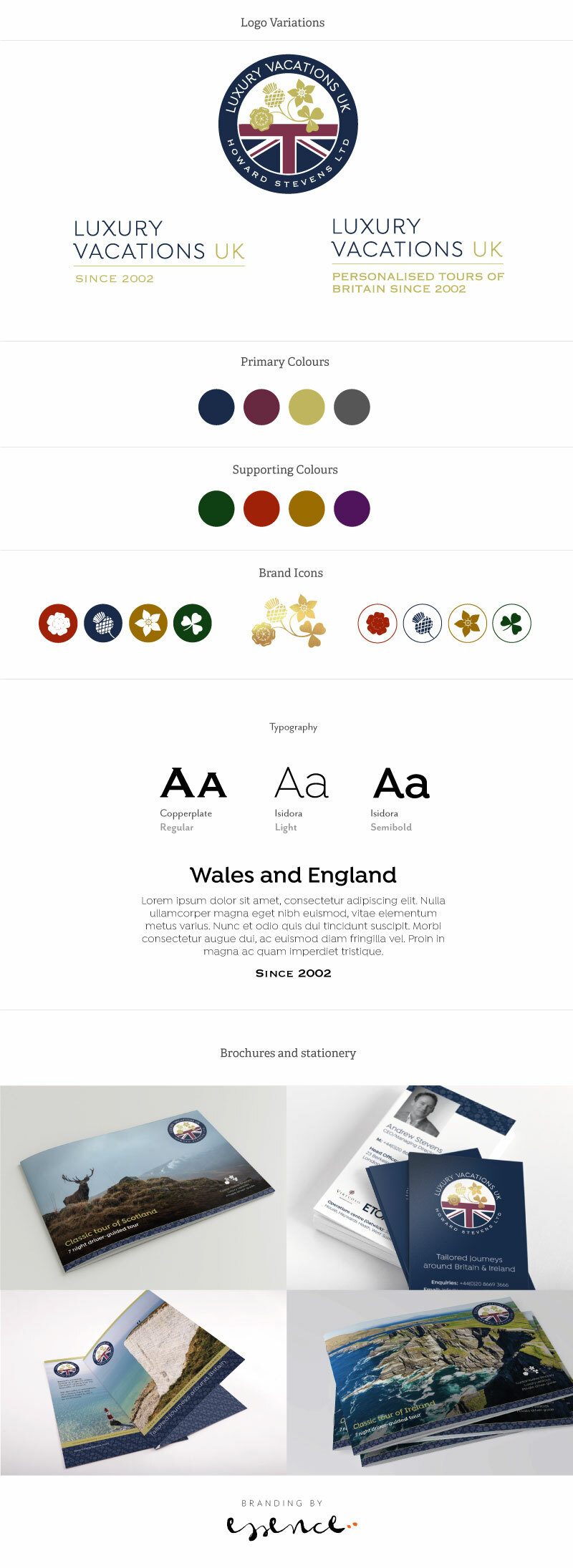
Luxury Vacations UK had outgrown its existing brand we developed for the client over a decade ago. The timing was planned to coincide with a major re-work of the tour operator’s website, as well as their promotional tour guides and the introduction of branded tour videos.

The new brand identity combines the UK’s iconic symbols of England, Scotland, Wales and Northern Ireland together with a classic, luxurious colour palette and visual details to be used in the material.

The re-brand focused on the company’s main audience, visitors from the US, who have cultural expectations and perceptions of the UK as a destination. The brand features a contemporary and non-cliché translation of the company’s values, deeply connected to their highest standards for customer service, luxury accommodation and the tours designed to allow overseas visitors experiencing ‘the real UK’. Delivering engaging, professional and expert tours with chauffeur guides has always been at the heart of the business and shows in the personal writing style of the copy, as well as the eclectic photography showcasing the tours’ highlights.

Using gold foil and a bespoke colour for each of the constituent countries means the brand identity is versatile to branch out into sub brands for regional promotional campaigns whilst remaining a recognisable badge for high quality luxury guided tours in the UK.

The brand has been rolled out across the new website, marketing materials and videos.

the-world-is-closed

Brand management in a locked down new world

175 days into life with Corona, businesses are getting used to developing ways of dealing with the volatility and uncertainty the pandemic keeps throwing at us. 

Surveying smaller companies we work with, there is a shift in brand management emerging. Initially, it was key to keep customers informed of restrictions and closures. Since lockdown has been lifted for businesses, this has changed to communicating safety measures and new procedures. 

In the early days of the crisis, we worked with our clients to prepare for internal and external communications. The Royal Orthopaedic Hospital implemented new strategies straight away, realising the need for up to date information. We helped them to utilise their existing system to adapt for internal comms.

Another client of ours, a dental practice, supported people with ‘home dental kits’ and online advice on how to keep their teeth healthy without being able to see a dentist. Since they were allowed to open again, they worked overtime to get through the mass of emergency appointments and help those most in need. By working flexible hours and reacting to the immediate needs of their patients, they secured a lot of new clients who couldn’t get appointments for months in other surgeries. It pays to be flexible.

Most of the companies feel that they need to maintain and improve the ‘goodwill trust and understanding’ they have received from customers, especially on a local level. Brick and mortar shops more than ever rely on their community. 

Rebrand and social media template designs

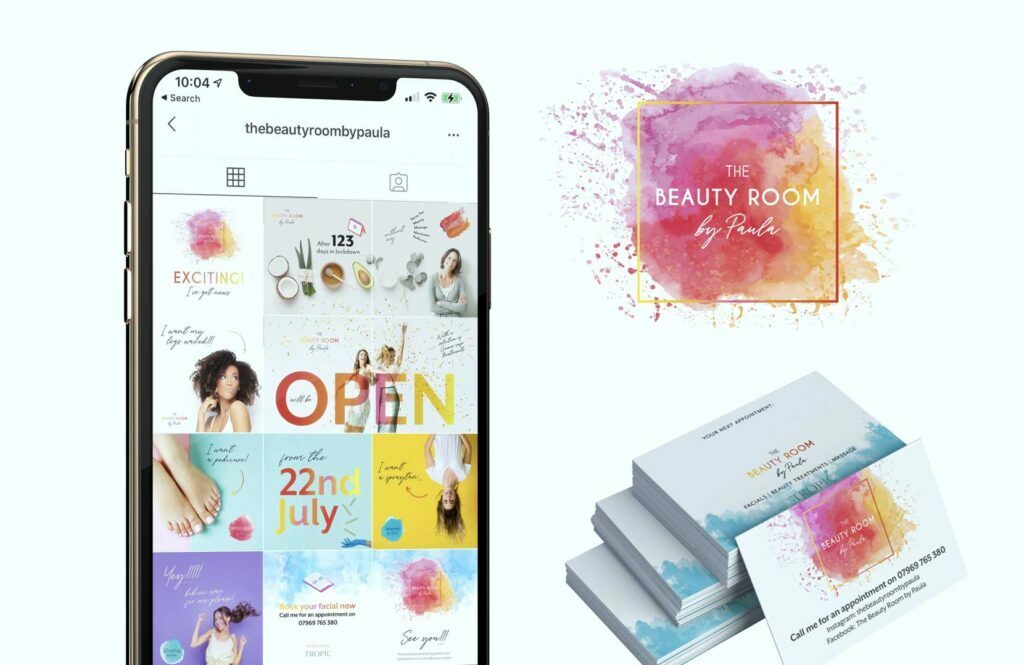
A beautician we’ve rebranded during lockdown had started doing online beauty tutorials, promoting selected products available to purchase online When it came to opening again, we created a social media puzzle grid to announce the news and inform customers of Corona related changes.

Another business, a tech skills company, changed all their focus to delivering courses online. There is a barrier of confidence to break through, but it’s also a great opportunity to reach a much larger audience.

The smallest local entrepreneurs and micro businesses have been hit enormously and are still struggling to make up for lost time. For them, communicating on social media has been the lifeline to keeping customers engaged without being able to take bookings.

Within all that, the overwhelming trend seems to be for brands to work their best to keep their promises. Everyone is tired and probably a little bit bored of this situation and it’s a delicate balance of pushing on within the limits and being able to fulfil expectations. The bigger brands have the advantage of networks, funds and processes. 

For the little ones, however, flexibility in changing service delivery, product ranges and in some cases their entire business model offers a real opportunity. 

Image from Twitter/@mmtowns

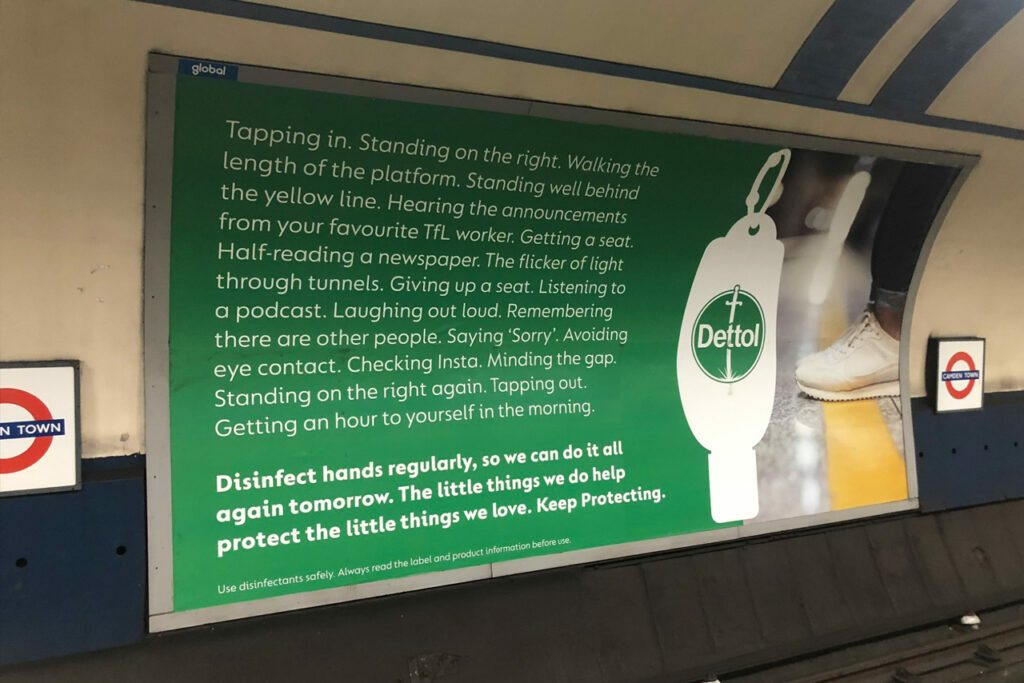
Nobody wants the patronising attitude of big brands jumping on the government messaging bandwagon. (Remember Dettol and their ‘back to work ad’ which recently got a lot of mocking?) Nobody wants to constantly be reminded of the crisis, either – another balance to strike in brand communications.

SMEs with their feet firmly in the community feel their efforts are best focused on excellent service delivery and customer communication without pretending all is rosy. With more and more businesses disappearing from the high street, there is a gap and a good chance for those with an open mind to create mid Covid brand loyalty. 


Cover photo by Photo by Edwin Hooper on Unsplash

What-do-brands-do

What brands do in a crisis

Another day in isolation, another day where brands are being made or broken by how they react, how they communicate and how they connect to us during this outbreak. 

I get really annoyed now by all those automated funnel sales emails that are coming through fishing for subscribers. The jolly sales talk of marketeers trying to tell me how to make my money with PPC and FaceBook advertising, or how they can set up retargeting pixels for me to work wonders. Put it on pause! My whole world is… 

It’s house hold brands as well though that show their true nature, good and bad.

Wetherspoons informed workers that they will no longer be paid, saying he would only start payments again once the Government’s scheme to cover 80% of wages is in place – despite the Treasury saying that grants for salaries could be backdated to March 1.

Sports Direct is highly criticised for their handling of staff safety amidst their belief that the shops should stay open despite all the dangers this poses to staff and shoppers. 

Apple, on the other hand, has been able to source 10M masks for the US and millions more for the hardest hit regions in Europe. In his tweet, Tim Cook shares the news. 

BrewDog, an independent distillery in Aberdeenshire, UK, has used its distillery to produce hand sanitiser and is giving it away to local charities and the community. James Watt, Founder of BrewDog, said on Twitter: “We want to do all we can to help everyone get through this difficult time.”

German manufacturers Rotkäppchen and Jägermeister are helping out by supplying ethanol for the production of desinfectant.

For those of us home schooling, various TV personalities are offering their time for free to keep kids active and help to educate them. Carol Vorderman has opened up her online maths school for free for the duration of the school closures: https://www.themathsfactor.com/

Joe Wickes is doing daily PE class workouts at 9am on his Youtube channel: https://www.youtube.com/watch?v=K6r99N3kXME

David Walliams releases a free audio story on his website every day for 30 days and there are lots of free activities/resource packs to download: https://www.worldofdavidwalliams.com/elevenses/

Darcey Bussell is giving free dance classes on her DDMIX FaceBook page. Audible has made hundreds of stories free during the lockdown. https://stories.audible.com/start-listen

Supermarkets are doing their best to make shopping easier for the elderly by having special shopping hours amidst panic buying and empty shelves.

There is so much going on, good and bad, and these just a few samples of how this crisis is not just a test for the operations side of companies, but also for their brands. We are vulnerable, we are uncertain and we lean on those we can rely on – be it in our neighbourhood via WhatsApp groups, via social media or phone calls. We don’t just seek the comfort (albeit mostly remotely) of our families and friends, it’s brands we look to for reassurance just as much as we look at our politicians and celebrities.

It’s judgement time and brands – personal or business – have the amazing opportunity to use their profiles to help people not just with products but mentally.

Of course there is one brand that should get a knighthood if there was such a thing. The NHS is doing amazing things. It really is a people brand. I am humbled by the hard work they do, the impossible situation they find themselves in and the ongoing commitment they show to our health. It’s absolutely awe inspiring. There are countless examples of their efforts to campaign for #StayAtHome…

I have been lucky to work with quite a few NHS hospitals / operations on branding and web projects, so it’s pretty emotional for me personally at the moment because I know the people that work there are struggling right now and there is not much I can do. I’ve volunteered to help along with 400,000 other citizens hoping that I can give a little bit back myself but I am afraid it will only be a small drop on a hot stone.

The NHS – for me – is definitely one of the brands that seems to be genuine and authentic from the inside out. Something every business should aspire to be from a human point of view.

I hope we will get through this together and have a chance to say a big THANK YOU to all those brands that are on our side right now.

attitude, brand loyalty, brand management, Brand Managment, brand message

Luxury Holidays in the UK – Can I book now please?!

We’ve been working with Luxury Vacations for more than 12 years now – rather shocking how time flies!

The team have always been amazing in a graphic design sense, appreciating and demanding good design for all their marketing material. Over the years, the brand has come to life in many ways and recently we are focusing on completely re-vamping all the digital material.

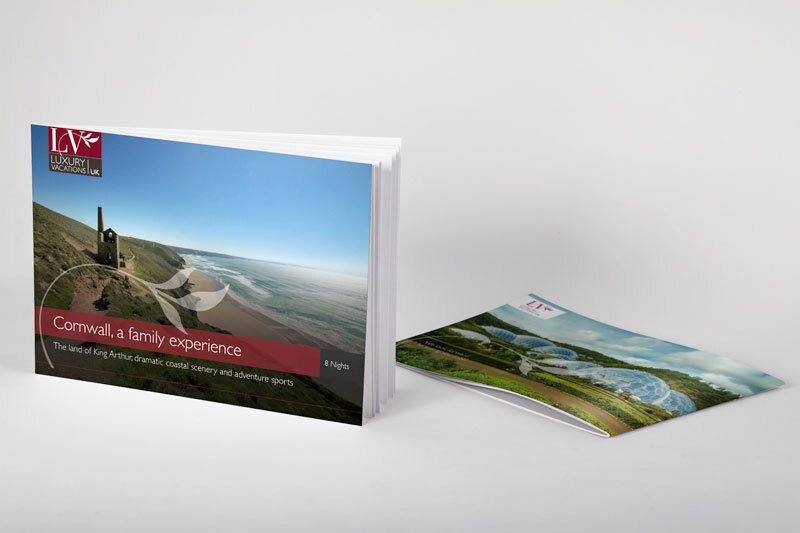
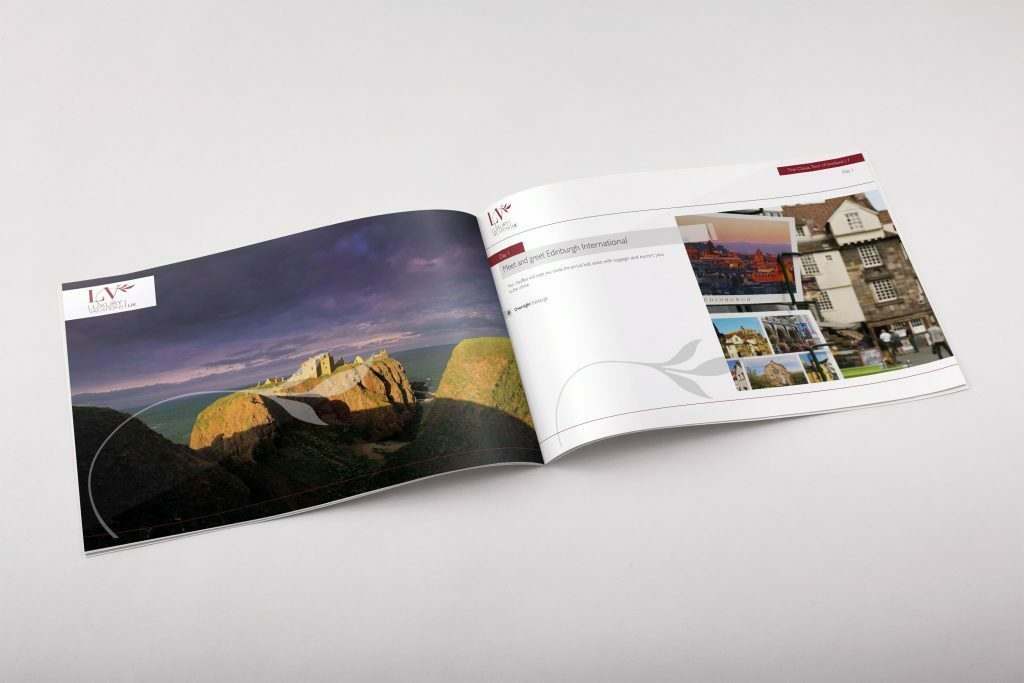
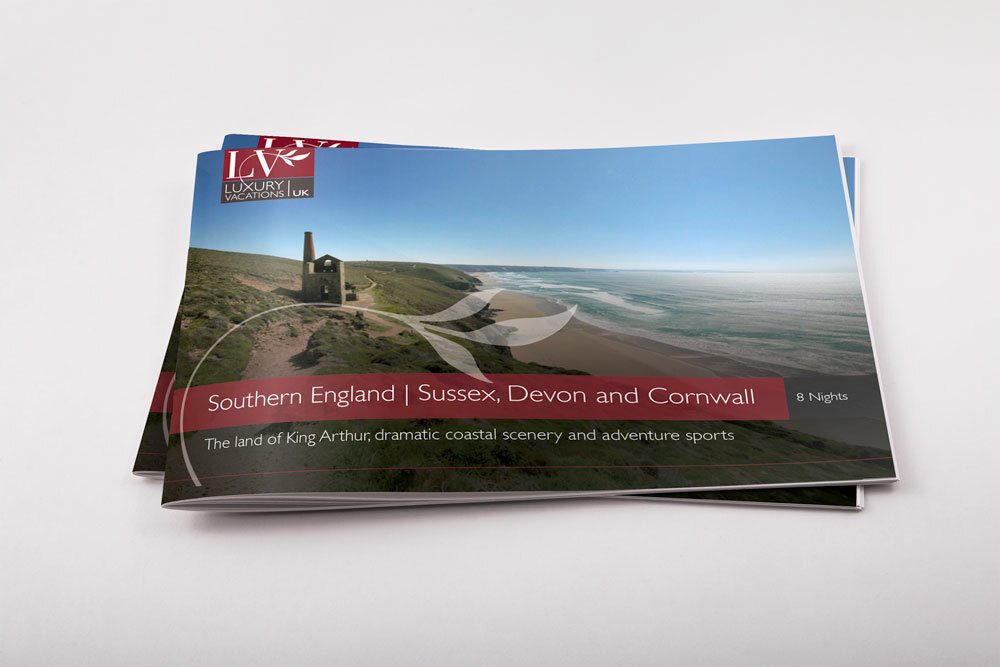
We are now at a stage where more and more of their fantastic tours are in brochure form, giving clients the choice to read it online or even request a printed copy. Thanks to digital print and much faster website speeds, the options are all there for customers. And from a design perspective, it all helps to create a rounded brand image that resonates with overseas travel agents and visitors.

Brochure Design