Today is international women’s day. It’s a day we always observed and celebrated back in the former East when I was a child. Our pen pals from Russia would send these amazing cards for it, and we would giggle cause they were our age, yet sent them as if we already were ‘women’. I never thought twice about it where the day came from.
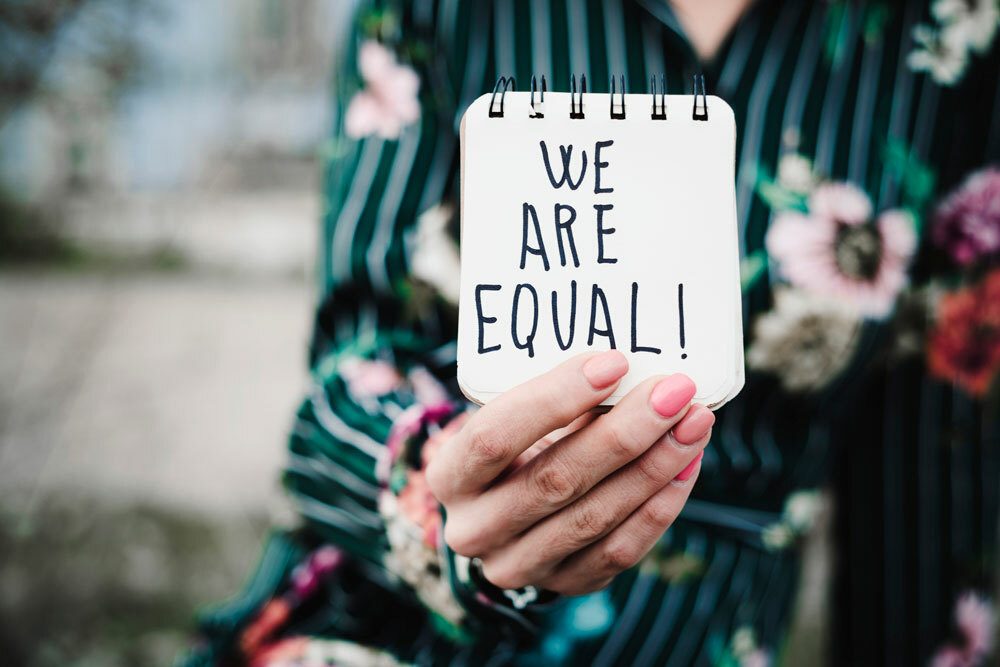
For me, it was meant to be a day to remind ourselves that women should be treated equal to men. A day to remember those women who had suffered in history purely due to their gender. And to remind ourselves that females are just as pioneering, scientific, artistic, intellectual and caring as men.
But where did International Women’s Day come from?
A short history of IWD
In 1908, 15,000 women marched through New York City demanding shorter hours, better pay and voting rights.
In 1910, at a second International Conference of Working Women in Copenhagen, Clara Zetkin (Leader of the ‘Women’s Office’ for the Social Democratic Party in Germany) asked women from all around the world to take the day and press for their demands. She proposed that every year in every country there should be a celebration on the same day – a Women’s Day – to raise awareness of women’s issues. She wanted them to tell their stories, which would help people understand their struggles as women, and what they go through to be able to succeed. She wanted to change the way we viewed women and the way we would treat them as equals to men.
When the day was first proposed, Zetkin said in her proposal that women should “receive an equal hearing in the political, industrial and educational fields. We should unite and not separate”. International women’s day was established to give women the “opportunity to participate equally in all public and political activities, and in all social, industrial and economic enterprises”.
International Women’s Day is about celebrating all women, in whatever country, and giving people a chance to speak out and stand up for equal rights and equal pay, for sexual and reproductive rights and for women’s health.
Why March the 8th?
“International Women’s Day was honoured the first time in Austria, Denmark, Germany and Switzerland on 19 March 1911. (…) On the eve of World War I campaigning for peace, Russian women observed their first International Women’s Day on February 23, the last Sunday in February. Following discussions, International Women’s Day was agreed to be marked annually on March 8 that translated in the widely adopted Gregorian calendar from February 23 – and this day has remained the global date for International Women’s Day ever since. ” (History of IWD)
In East Germany, we had the 1st of March to celebrate the national army, the 3rd to celebrate my dad’s birthday and the 8th was International Women’s Day. That’s just the way it was. Reading more about the origins of International Women’s Day, I realise there are some quirky correlations with other celebrations.
The Greeks have their Festival for their Goddess Artemis on the 8th of March. Artemis is honoured for protecting animals and crops.
It also marks Welsh Witch Day when women who were of magic walked among ordinary folk being able to do so without finding themselves recognised or prosecuted.
What it means for us
I love the notion that after all these years, and thanks to some great social media campaigns, International Women’s Day is celebrated much more in the media than when I first came to the UK.
Of course, the commercial focus is more on Mother’s Day, but to see and hear so much about the 8th of March as a date to address women’s rights and those amazing female leaders across various sections of politics, science, arts and culture, education and health that continue to make a difference.
Hotel marketing ideas may not be on your mind right now… but with the new timeline to opening up announced, it’s going to be critical in the coming weeks to secure much-needed bookings. The impact of the Coronavirus (COVID-19) has been devastating for many, but everyone will probably agree that one of the hardest-hit sectors is the hospitality industry. Hotels, restaurants, spas, golf clubs, theatres, concert halls and many other leisure companies have been through crazy times in the past year!
The COVID-19 pandemic is still disrupting travel to destinations all over the world. However, it is crucial that you start planning your luxury hotel and spa recovery strategy now. The travel demand will start to increase eventually, and you don’t want to fall behind your competition when it does.
We are looking at hotel marketing ideas that will help you plan the recovery and reopening of your venue this June.
Here are some top marketing strategy ideas that you need to utilise when preparing your luxury hotel and spa for re-opening.
Revamping your website
Display the current status of your business so there are no surprises for visitors. This information needs to clear and concise and should include at least the following:
Is your business currently open or closed?
Has your cancellation policy changed?
What preventative measures do you take to keep staff and customers safe?
Do you keep certain facilities closed or limited?
Are you following government guidelines? Have you taken all possible measures? This will boost customer’s confidence and trust in your business.
Along with this information, tell your website’s visitors where they can find further updates and who they can contact if they have any questions.
You could simply add a temporary banner on the homepage. Or you can design a specific landing page that visitors see when they come from social media or adverts. There are lots of reasons why your hotel and restaurant marketing ideas needs to include a brilliant website.
Whichever approach you take, a page that clearly communicates your latest news can help a great deal in creating trust.
Frequently asked questions (FAQ)
FAQs are a simple hotel and restaurant marketing idea. Easy to implement, FAQs ensure anyone visiting your site will find the answers they are looking for. You probably have a set of regular questions that keep cropping up.
FAQs can also include other information about your hotel, spa, amenities. You can mention new products/services, offers/deals, and anything else relevant to your business that people should and need to know.
Social media campaign announcing re-opening
Many people use social media for planning their holidays. With channels like Instagram, you can use your beautiful venue to your advantage. Existing and potential customers will enjoy engaging photography that tells your story. They will also look to your social media for the latest updates on the COVID crisis.
You will want to post a statement about the current status of your venue and your plans for re-opening. Social media is perfect to announce your re-opening strategy. Write the core message in an eye-catching post, and link to the full statement on your site. There, guests can find out exactly how you are planning to re-open and what measures you have taken to keep them safe.
You can also talk about special offers and rates for the re-opening. This can be a time-limited offer or something for only a certain number of customers. People love promotions and discounts, so here is a chance to create some buzz and excitement!
Making loyal customers a priority
Customers who have stayed at your business before will likely book a reservation again during these uncertain times. Reward loyal customers with exclusive and personalised packages.
Don’t forget to let customers know about your loyalty programme. Use social media posts, blog posts, or whatever platform your target audience prefers to use. When thinking about hotel marketing ideas, building customer loyalty is a must. Word of mouth advertising is one of the best forms of advertising. People buy from people – and they are much more likely to act on the advice of colleagues, friends, and family.
Hotel marketing ideas involving local businesses
Many businesses that had events and conferences planned have had to cancel. You could start to offer deals to these businesses and potential clients to re-book these events and conferences at your hotel. Provide these customers with lowered rates, exclusive packages, and other perks to secure reservations.
Working with businesses in your local area really helps with marketing your hotel. Businesses and clients that have a great experience with you will likely use your hotel again and recommend it to other clients.
Managing cancellations
If someone wants to cancel their reservation, then they will. However, offering customers the ability to move their reservation to a different date will help you keep some reservations. Let people know that customers can move their reservations to a different date instead of cancelling.
Don’t forget to let them know who they need to contact to deal with their reservation cancellation or changes.
Promoting your safety measures
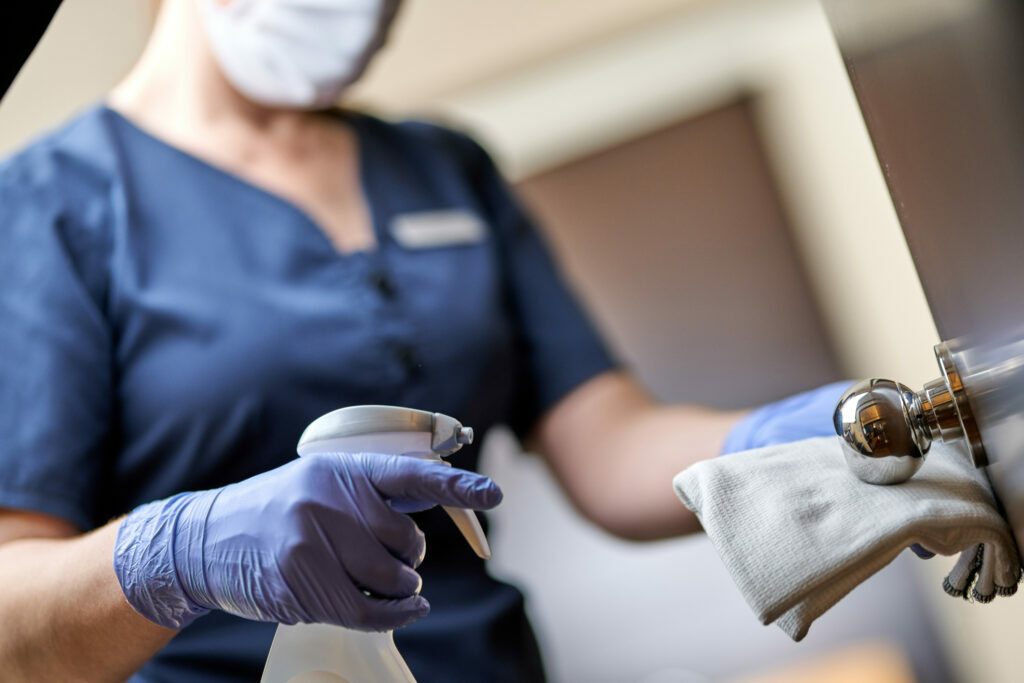
One of the most important task for businesses during this pandemic is your venue’s cleanliness and sanitation to ensure people’s safety.
There are many steps which need to be taken in order to implement this properly. Some of which include:
Education employees about preventative measures that will be utilised by the business
Cleaning the building and amenities thoroughly and frequently throughout the day
Reducing the number of workers in the hotel at one time
Redesigning processes to allow for social distancing to take place
Implementation of barriers in areas that could receive higher traffic
Using technology when face-to-face meetings can be avoided
Make sure that customers know you have taken these measures. This is something you should promote heavily. This is not just a hotel marketing idea, it really applies to any business interacting with the public. Talking about measures and precautions you are taking will help customers feel safer, build trust and customer loyalty.
You can even introduce branded safety items. Think masks and hand-gels to offer to customers when they visit your luxury hotel and spa. This will re-inforce that you care about health and safety of your visitors. It can also work as a marketing tool. People may end up continuing to use those products after their stay. Your business’s name and logo will receive more awareness. Branded gifts are always a good method for marketing hotels and increasing the interaction and engagement with your guests.
I hope this list of hotel marketing ideas will be useful for you to plan your roadmap back into ‘normality’. If you need any help with any of it, please get in touch!
A media kit (or press kit) is a package of information relevant for the distribution of information for companies, charities or other organisations. They include facts about the people involved, the product, service or cause, as well as brand information, logos, images and visuals supporting any press releases.
Media kits are a great way for a company to show just how engaged they are with their audiences. Whether you’re a local business, a non-profit or a large corporation, having a media kit will help you stand out from the crowd. So how do you go about creating one? Here are 10 things you should include in yours.
Background
When it comes to building an audience, the media needs to know who you are and what you do. The ‘about us’ section should include all of the basics: who you are, what you do, where you are operating, when things are happening, why you do what you do and how you do it.
Journalists are busy people, so keep the introduction short, to the point and consistent with your brand message.
Bios of your team
Include anyone in your team who is suitable for interviews, expert commentary, and speaking engagements. Make sure you include those members who are being mentioned in any of the press releases. Of course you include their bio in the press release together with the company information. It is however good practice to have them in the media kit as well.
Your products and services factsheet
This can be short bullets outlining your products or services. Think of it as factual descriptions similar to how you would present them on your website or in your brochures. Avoid to make it sound like marketing though. Highlight what makes you stand out from others. It’s also useful to include known Q&As here.
Case Studies
Case studies are a great way to demonstrate the success of your products or services. So without making this into a marketing document, here is a chance to include testimonials and recommendations from suitable sources. Again, be careful to avoid promotional talk and keep it factual and informative with the journalists in mind.
Clients or associates
Obviously ask for permission first, but if they are ok, mention them as it adds credibility to your organisation.
Recent press releases
When selecting press releases for your electronic press kit, it’s best to choose something that has been released within the last six months. Ensure that the heading of your press release is easy to grasp and includes any specific announcements the media may be looking for.
You in the news
Already had some mentions in the media? Here is your chance to shout about it! If you’ve been on camera, show a clip – it will work well to show researchers and producers that you are not a newbie… The media tends to have a knock-on effect so showing where you’ve been featured can be really useful.
Avoid any copyright issues by including the name of the outlet with a link to the article or clip. You are not allowed to add their logo without their permission. You also can’t bypass this by re-writing it or making it into a pdf or similar. Best to be straight as you don’t want media coverage to cause any issues.
Your brand kit / multimedia elements
Include your logo and logo guidelines, any photographs, infographics, graphics or videos that will help illustrate what you do. You can link from a pdf to a shared folder like dropbox or google drive – or directly from your website. That makes it easy for journalists to download them rather than having huge attachments.
If you need help with creating your brand kit with your logo, fonts, colours and brand visuals, or a website that can accommodate this information, get in touch with us to see how we can help.
Awards / memberships / accolades
If you have any recent and relevant awards, mention them. This doesn’t have to be an elaborate section, but it will again help with reputation building.
Contact details
Don’t forget to have all your contact details in your media kit. This includes any social media channels where you are active, as well as traditional phone numbers, email addresses and names of the best person to approach with any questions or opportunities for coverage.
In essence, press kits should give journalists a flavour of your brand that contains all the relevant background info and gives them an appetite for more. It’s a collection of visual and editorial facts about your company and gives journalists a helping hand if they see an opportunity to feature you.
While 2020 took every business by surprise, it revealed a new shift in customer trends that are likely to continue in 2021. As we head into the New Year, now is the time for your hotel or hospitality business to re-evaluate their marketing strategies to increase sales, encourage customer engagement and create meaningful experiences that go beyond face to face marketing.
Our 2021 marketing ideas for the hospitality industry
Whilst we are still struggling with lockdowns, check out our top eight marketing ideas your hotel or hospitality business could look at. Some will work well to keep in touch with customers whilst localities remain shut. Others are great to put in place for when you are able to re-open.
1. Virtual tours of your property
If we’ve learned anything from COIVD-19, it’s that there are so many creative ways to use technology to engage your guests. Providing virtual tours of your property using technology, such as virtual reality, allows your guests to feel like they’re experiencing your property from the comfort of their own home.
You can take your guests on a complete walkthrough of your hospitality property, highlight your amenities and show the type of experience customers would have if they decide to visit. According to GuestCentric, properties that offer some type of virtual tour are clicked on ten times more than properties without this technology.
2. Interactive event experiences
A great way to stay in touch is to offer extra value to your customers. While it’s easy to send over a brochure of your company and ask customers to book with you, why not also provide something extra to your customers lives. Think about creating a live event, where you can invite guests in-person and host online at the same time. This is a very effective way to create unique guest experiences.
For example, if you’re a restaurant that specializes in French cuisine, host a live event with one of your chefs to teach viewers how to make a traditional dish or drink at home.
You can allow guests to ask questions and make comments to create an interactive event. You add value to your customers everyday life, provide fresh content and establish yourself as the authority in the hospitality business sector and creating engaging marketing content.
3. Take advantage of social media
Social media platforms are always changing and offering new ways for businesses to connect with their customers. For example, Instagram now offers reels. Reels are short videos between 15-30 seconds long that can be created to connect with your audience. Instagram also rolled out an online shopping platform, so you can connect your products directly to your Instagram, with relevant links to buy these products on your profile.
Especially during a lockdown, social media is amazingly versatile and effective to keep in the minds of guest and to attract new visitors in future. Showing people behind the scenes, your kitchen, gardens, any refurbishments, how you remember your hotel from the past year, take out menus and special event boxes all give plenty of content to share online.
Another great social media platform that has made waves this year is TikTok. With over 800 million users active on the platform, TikTok is a great way to reach potential customers through videos. Many brands participate in the trends users create on the application, finding ways to relate it to their own business. If a video is interesting, it may become “viral” and draw extra attention towards your brand.
4. Utilise text message marketing
Customers love when you can simplify things, and almost everyone uses a smart device, so utilising text message marketing is a great way to stay in touch with your guests. Once you are open again, you can use it to make life easier for bookings and extras.
No new technology is needed, and once they opt in, it will open a portal for easy communication. There are a variety of ways you can use text message marketing in your business to provide an exceptional experience to your guests.
You’re able to:
• Confirm reservations and provide instructions on how to get to your venue
• Allow guests to make requests, such as extra blankets or towels, directly through a text. You can use text messaging to confirm the request and let them know when their supplies will arrive
• Keep customers updated on activities or events that are being offered on your property
• Provide discounts, deals or offer extra services to your guests as part of your hospitality marketing plan
5. Create a loyalty program
Offering a loyalty program is one of the easiest ways to connect with your customers in the new year.
Creating a loyalty program can either be a physical or digital program that customers join when they visit. It will allow them to have benefits after spending money at your location. For example, hotels like the Hilton will let guests accumulate “points” every time they visit their properties. These can be used for free hotel stays and benefits like free upgrades.
If you’re an attraction or restaurant, you can offer a free meal or visit after a certain amount of times. Make sure to ask your guests for feedback on what they enjoy about the program. That way you can tailor it to fit your specific business needs.
6. Integrate chatbots on your website
Imagine being able to answer all of your customer’s questions and concerns at any time of the day, without having to even pick up the phone. One of the top marketing trends for 2021 is to integrate a chatbot on your website. A chatbot provides businesses the power to stay in touch with customers, offer support, and answer important questions, 24/7.
Chatbots are a pre-programed application that can answer customer questions and help book a reservation. They can even connect them with a specialist when a customer lands on your website. This application even has the ability to respond to customers in multiple languages with its automatic language detections.
Chatbots are game changers, especially for businesses who don’t have staff working around the clock.
They can also be useful to share your safety procedures to make your venue COVID safe and re-assure them by answering repeat questions about booking and cancellation policies, changing opening hours etc.
7. Use influencer marketing
People are more likely to follow suggestions made by those they trust and look up to, instead of an advertisement. Influencer marketing is when you reach out to an individual that has an established
audience that matches your target audience, and offer to collaborate to promote yourself to their audience.
There are many ways you can do this including written content, videos, or social media posts.
To track if this method works for your business, companies will offer a discount code that the influencer will promote to their audience. Tracking the success of this code, and overall analytics of your website/business, will help you to track the efforts of your campaign.
8. Collaborate within the industry
Collaboration is a great way to market your business and enhance your guest experience.
For example, if you run a restaurant, you might want to partner up with a hotel to offer their guests a special discount if they visit your establishment.
Or if you’re a hotel, maybe you want to partner with a tour company to offer great rates, and exclusivity of their group booking needs. These partnerships not only help your business grow, they help the entire industry grow.
There are many more marketing techniques that can be integrated into your hotel or hospitality business in 2021. Creative, interactive brand marketing ideas that excite your guests will really make the difference in whether you reach a higher value of customers or if you blend in with the crowd.
Have a look at our hotel branding and design portfolio to see examples of hospitality marketing in action. You can read more about our branding and design work in the luxury hotel and restaurant sector here.
We would love to help your business with branding, marketing and design. Drop us a note for a free consultation.
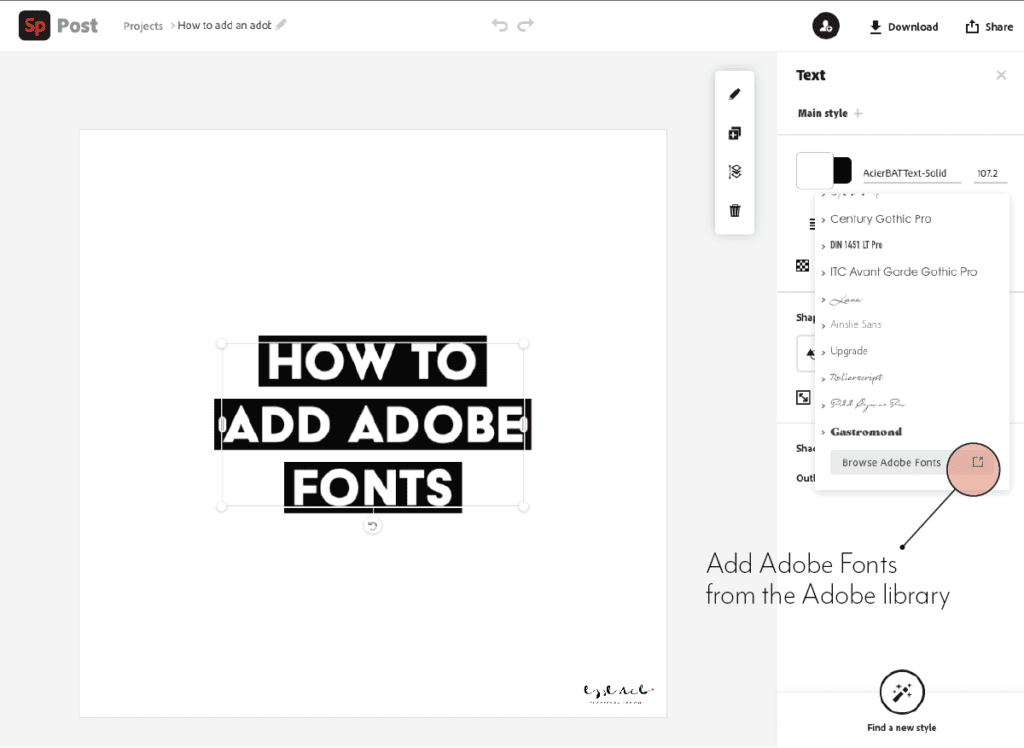
If you want to add Adobe fonts to your Adobe spark app to use in branded content and you think the obvious route is to go to ‘brand’ and add the font there, you may look in despair.
Of course you can add your own fonts, but that involves uploading the font files – which with Adobe fonts you can’t do.
It’s only after contacting support that I came across a workaround.
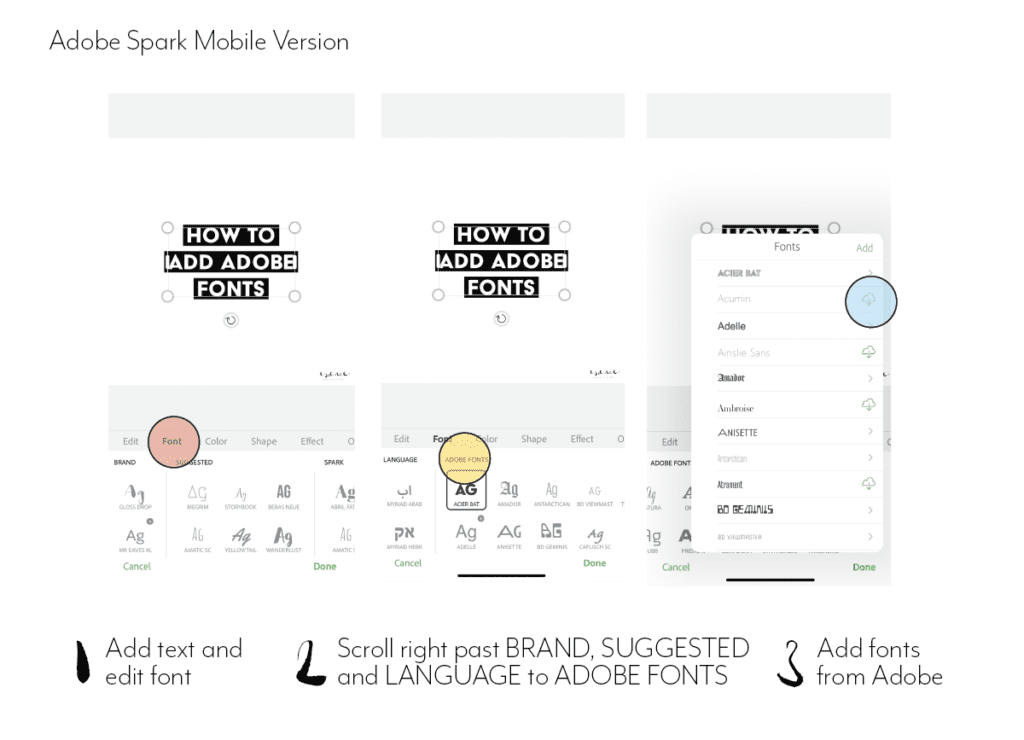
You can’t add the font to the brand templates themselves, but you can add them to text in the post itself.
ON DESKTOPON MOBILE
Add a new post
Go to add text and edit
Find fonts
Scroll down on desktop until you get to Adobe fonts and scroll to the right on mobile to the last panel with fonts.
Activate them and assign them to the text.
Hope this help! And please let me know if you find any other workaround to this!
If anyone ever had any doubt, this year must have shown to businesses of all sizes and varieties that the world is happening online. And as a business, it’s ever more important to give customers a great brand experience when you can’t be there face to face.
There are lots of ways to have an online presence, and each business is unique in some way, so there isn’t a right or wrong formula – but looking at a combination of different media together with ‘traditional’ print, advertising and marketing will be a good starting point to devise the right strategy for your brand.
Below are some ‘brand touch points’ where people will interact with you to consider. Remember, it’s no longer a case of having a product, filling a niche and giving customers the choice of ‘take it or leave it’… Brands are made by the people that buy them. It’s vital to build loyalty, support and advocacy for what your brand stands for right from the start so your business resonates with the right audience.
“Your brand isn’t what you say it is. It’s what they say it is.”
Marty Neumeier
Website The headquarter of your online operations. All roads should lead back to it in some shape or form (and in your email footer) and landing there should be a pleasure that won’t disappoint. That’s one of the reasons why a website can’t just be something that looks like a template you populated in a day with stock images and dated graphic. It needs to sparkle and be as genuine as your brand should be.
You may need a brochure or an e-commerce site, or a hybrid of both. You may need an app for mobile devices. Talk to your agency about the best option and beware of tying yourself to systems that can’t be widely supported.
Invest not only in a progressive CMS (Content Management System) and design made for you specifically – think about using your own brand photography and don’t forget the website copy. If you spend all this time planning and organising a new site, you may as well go the extra mile to make it as future proof as possible.
Think about using video on your site – explainer videos for instance are a great way to bring your story in front of your clients in an engaging manner. Sound could also be a good medium, but give people the option to browse on mute! Nothing worse than going to a website in your break and the whole open plan office knows which site you’re on…
Make sure your site’s design and layout is responsive, so it looks good on a mobile or tablet and on a desktop or large screen. Different content will need to be considered for different devices, but that’s where your agency can help you with their expertise and advice on what works best where.
Use new technology to make maintaining and updating your site easy and time efficient. Dynamic content, custom fields and advanced integrations can transform the way you use your web content as part of your marketing – and save you a ton of time.
Don’t forget about speed, SEO and security. And GDPR! That subscribe form better be opt-in and your cookie policy should have the required choices available if your site is setting cookies. Have a look at your privacy policy if you collect any date and make sure your site has a good SSL certificate so users and browsers can trust their information is secure.
Thankfully, there are lots of tools available online which allow for entry level functionality that can grow with your website as you grow your business. You don’t have to start with a high-tech rocket to reach the stars. It has to be capable, for sure, but with the right base you can add more features as you go along and learn more about what your customers need.
Social Media / Third Party Platforms There are so so many platforms out there now, one thing is clear – you can’t be on each one of them. So a good first step is to ask where your ideal customer hangs out. Using your ideal client as the central focus for how you run your online marketing is a neat little helper whenever you get stuck. What would they want? Where would they go? What would they expect? Would my content make sense to them? The answers will guide you to finding a manageable selection of platforms to create your profile on.
Just like for anything that has your brand identity on it, make sure your social media profiles look the part. Consistency across all the different media will help to establish your presence in the market and give your customers confidence that they are in the right place.
Look at getting a suite of templates for social media in place. Make a content plan. Think about what to post where when and to which audience.
If you are using Zoom or similar video chat software to hold client meetings, think about your background. It may be worth to create a branded background that looks professional if you have to work from home without a home office.
With a good reputation and the right audience, you don’t have to shout to be heard.
Regine Wilber
PR Having a presence in the news is a powerful tool for building your brand reputation. If you have a story to tell, tell it. There are not only literally millions of blogs and websites out there looking for fresh content, there are also reputable online events, magazines or news sites where your latest news could be featured. It takes time and patience and a bit of luck, but it’s all there for you to establish your brand online.
Emailsand beyond There are some fantastic tools out there to help make your customer’s journey a smooth and happy one. From online chat bots to personalised, automated client email campaigns with Zapier or IFTTT integrations, the possibilities and opportunities are endless. Email is still one of the most important elements in customer communication, so make sure it’s top-notch.
Think about spam prevention, which can be a real minefield. No point sending out fantastically crafted emails if they end up in spam. Try plain emails with interesting footers rather than mailchimp style HTML templates that may switch off the recipient because they instantly think they are being sold to. A/B test a campaign with different approaches.
Make sure your list is clean; no point having unsubscribes and spam reports from people who haven’t really asked for being contacted. There are some great email providers out there for transactional emails which can tie in with your website and submission forms and provide a link to your CRM where you keep track of your contacts and lead pipeline.
I also wanted to just touch upon measuring your activities. Google analytics, serpstat, rocket link and bit.ly, jetpack and all those tools within different platforms provide you with data about how your content performs. It’s a good idea to spend some time to assess which metrics are of real value to you, what matters at the end of the day and which you should mostly focus on to make a difference to your bottom line.
Hopefully this gives you a brief overview of the complexities of a digital marketing strategy. With any of these, consistency, continuity and good content is key to your success online.
If you’d like to chat about your website and everything around it, please get in touch!
If cats could talk, would they cry… by Anatoli Scholz
I kept the book for my holiday so I could read it cover to cover. I mean – if cats could talk… I have so many thoughts about that! Forget about Garfield, we’ve got a house cat and I do wonder…
The scene is set nicely to get you into the feline transformation universe.
I enjoyed the light hearted atmosphere the author creates whilst painting the picture of our main character’s background. I would have liked to explore a bit more what life as a cat is beyond the obvious challenges of food, communication and movement (although communication was unexpectedly uncomplicated).
The book moves through the various characters involved and you go with them until eventually you arrive at the place where it all comes to a finale with some catty surprises along the way.
It’s certainly been an entertaining and easy read and it did make me think (the end is interestingly ambiguous). As a fan of Felidae by Akif Pirinçci, I was perhaps hoping for a bit more intrigue and cat related observations, but the book is definitely worth a read, cat lover or not.
One detail I noticed which is totally ‘just me’ I suppose was the paper it’s printed on – it felt really coated and stiff, something I had to get used to.
I’ll definitely recommend it and perhaps there’s a part two…
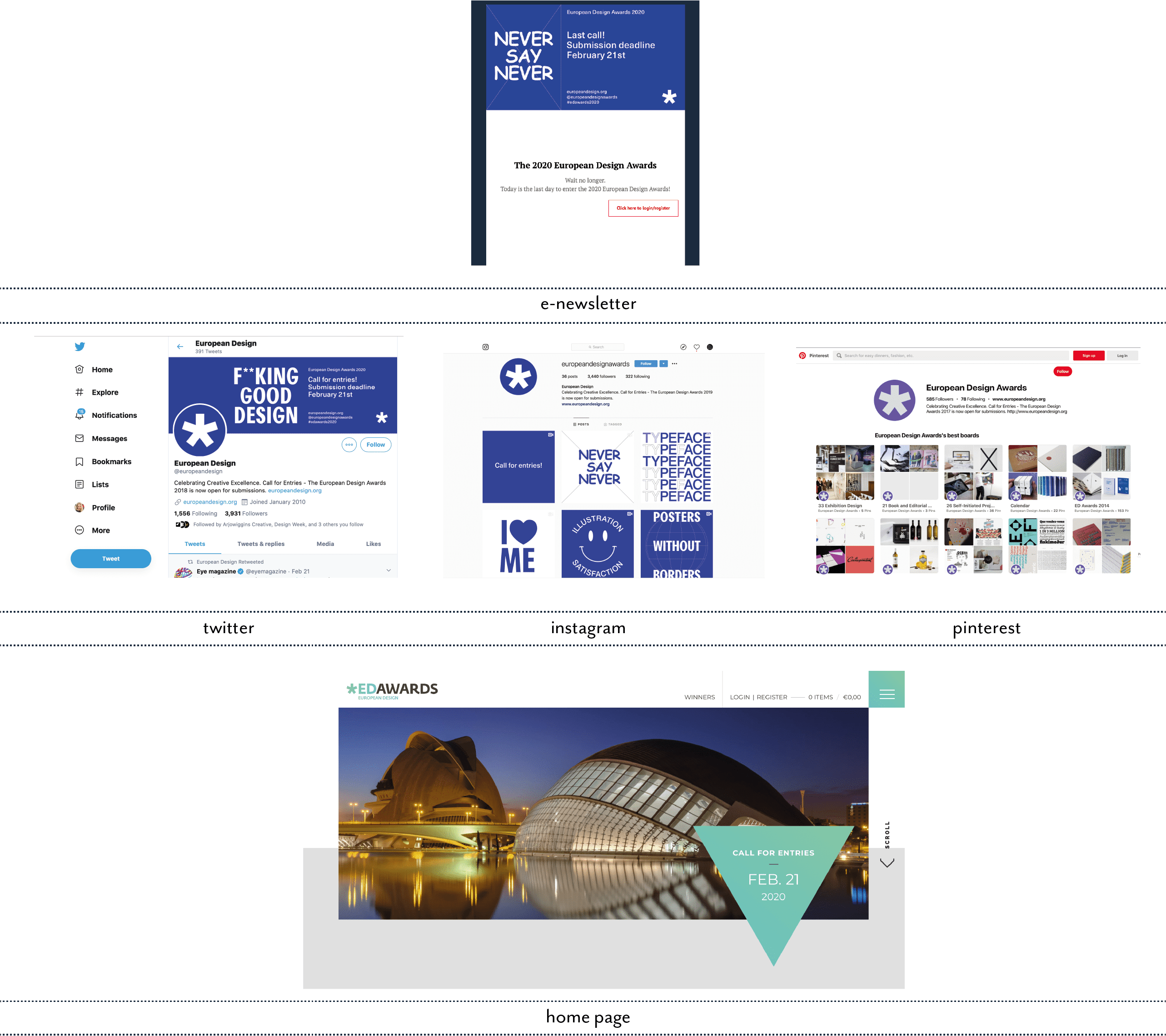
This morning, something dropped in my mail box and I had to look twice, three times even and check my previous emails to see if it really could be true. Did Gmail and Unibox have a serious issue with their font translation? Or is the font of choice for the European Design Awards entry newsletter really Comic Sans – in capitals?!?!!?
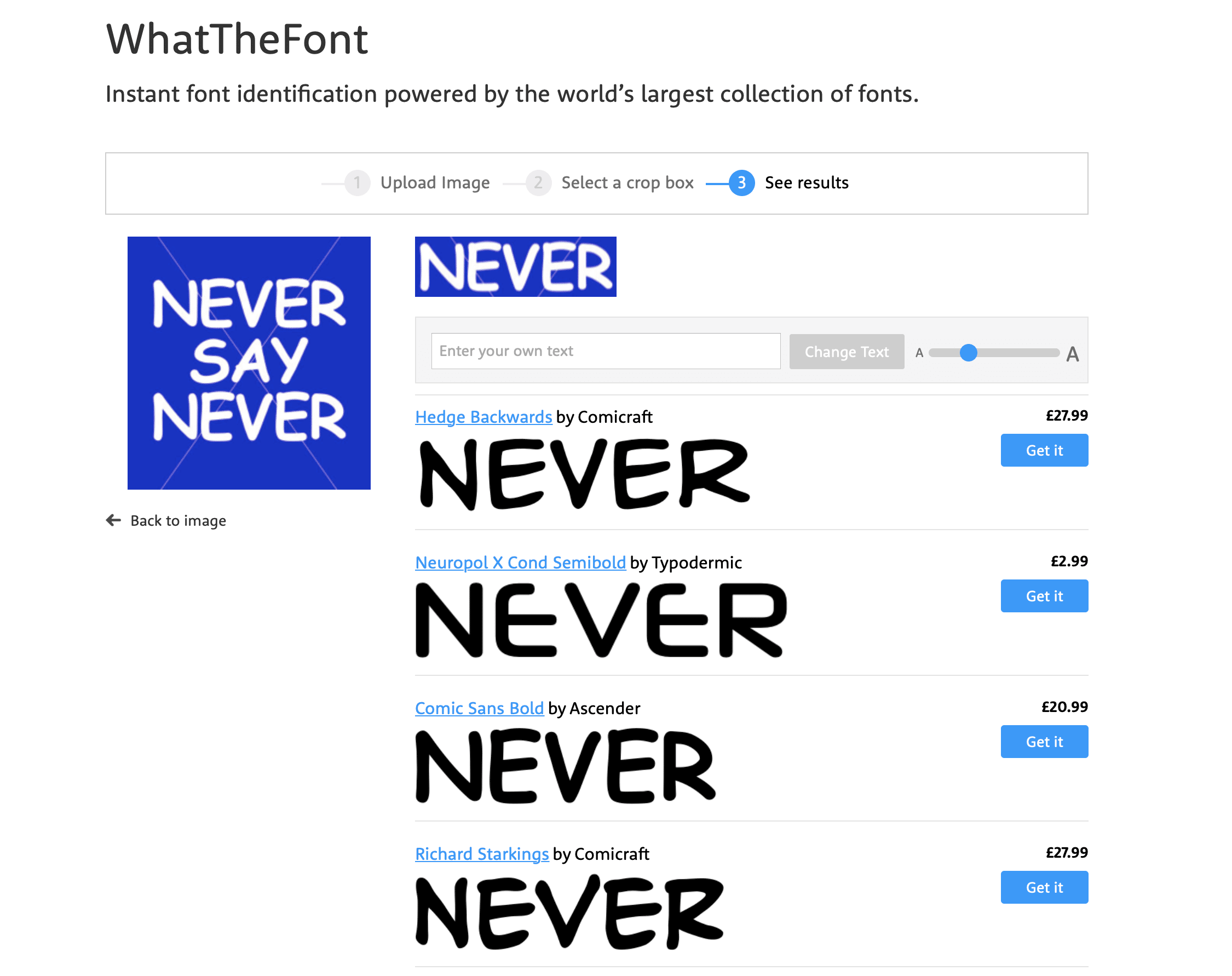
In a mild state of shock and disbelief (obviously there are more pressing issues out there than what font an awards organisation chooses to pop in their email header design), but I had to check it out with WhatTheFont and it really seemed to be Comic Sans… Hmmmm.
And then it hit me. Never say never! You can laugh now at just how dumb a moment I’ve had this morning. Their little visual hook was just perfect to get me, obviously gullible and opinionated when it comes to branding and design, to keep reading… so well done, mission accomplished!
My only criticism, I guess, is the fact that the newsletter and their social media look so different from their actual web home page. I think that’s what threw me. It was only when I saw their Instagram that the penny dropped and I could see the method in the madness.
So, after all this, and hanging my head in shame for doubting their taste or typographic sanity, I can only thank them for highlighting once again how critical good typography is for design, no matter which media.
With the amazing tools available today for web, email and obviously print, typography is sadly still very much an afterthought for SME brands with a ‘that will do’ attitude when looking at their marketing and brand collateral.
We use cookies and similar technologies to improve your experience on our website.
Read our Privacy Policy.